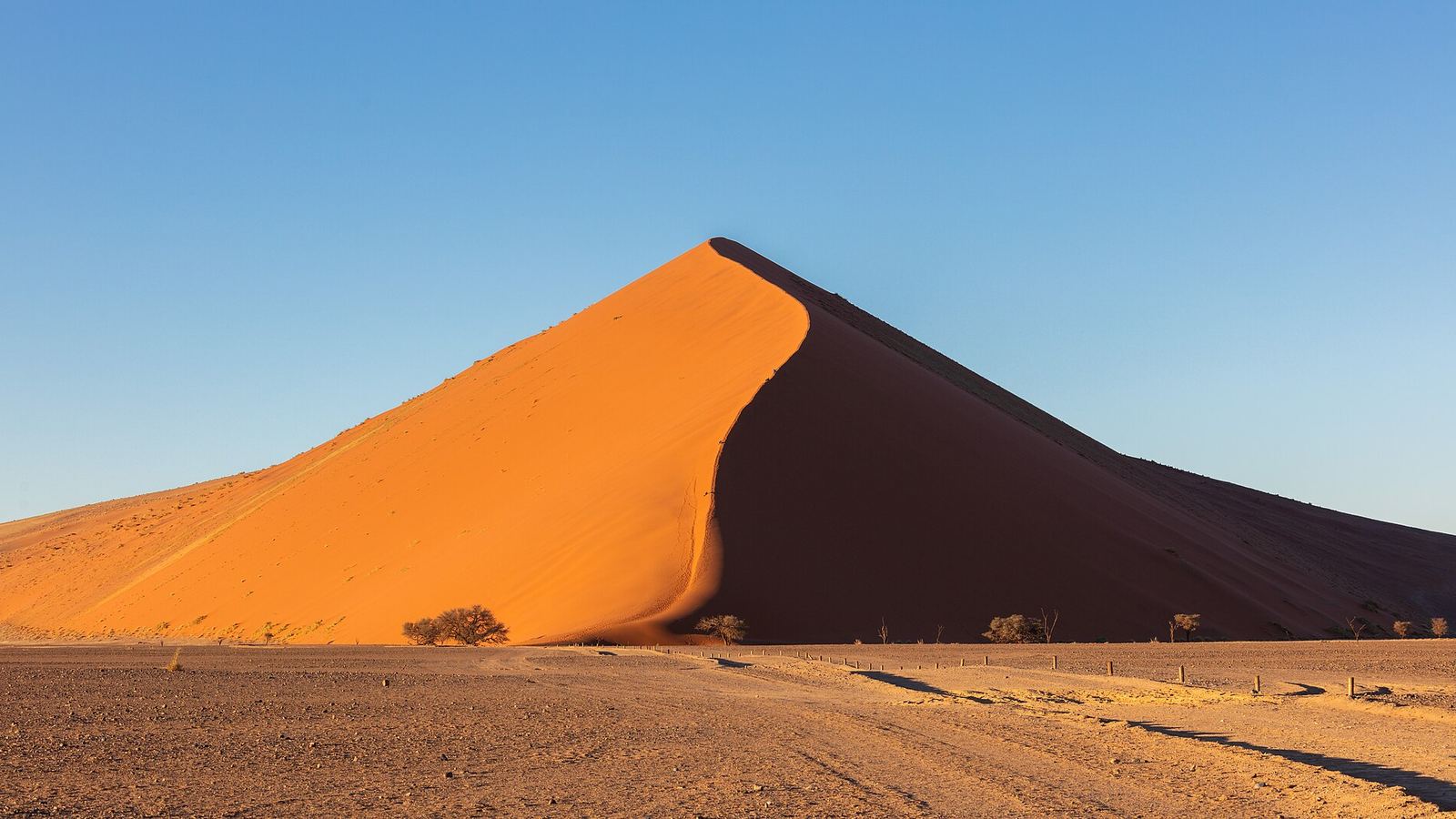
Is Namibia safe to travel?
Updated October 2026
🌐 Italiano · Français · Español
Is a guide mandatory in Namibia?
No, useful but not mandatory
At a glance, if you go with your own vehicle
- Roads: 22.0 deaths per 100,000 people a year, about 4.4 times Italy (5.0); WHO Africa region 19.4, world 15.0 (WHO estimate for 2021). (World Health Organization — Global status report on road safety 2023)
- Vehicle, drones and permits Temporary import of your vehicle Cross-border road charge Drones National park rules Wild camping Starlink terminals what the official sources of the country say
- Overland regions
Advice from local guides
Maghitta Adelle Visser
3 November 2026For anyone travelling Namibia in their own vehicle, remember that distances between fuel stops and services can be long, so refuel whenever you can and carry drinking water and a suitable spare tyre. On gravel roads, slow down and allow extra time; I also recommend avoiding driving after dark, especially in remote areas.
Sandura Tours
16 November 2026The biggest risk in Namibia is the driving, not crime or wildlife: most accidents are single-vehicle rollovers from too much speed on gravel, so stay at 80 km/h or below on gravel, never brake hard, and never drive after dark outside the towns. Distances are long and services far apart, so fill up at every fuel station you pass (on the Skeleton Coast there is none between Henties Bay and Palmwag except Mile 108), carry at least 5 litres of extra water per person, check your tyres and two spares every morning, and download offline maps, as there is no signal between towns. In the remote north-west, take on passes like Van Zyl's only with someone experienced leading. Namibian guides are invaluable: with the driving and the long distances in experienced, qualified hands, every experience along the way is amplified.
Going with your own vehicle?
21 local guides on GuideMeet work in Namibia: they know the roads, the permits and the areas to avoid. You contact them directly, free and with no commission.
- Sandura Tours
Windhoek, Namibia - Maghitta Adelle Visser
Swakopmund, Namibia  C Africa Safaris & Tours
Windhoek, Namibia Charel Schreuder
Cape Town, South Africa Ultimate Adventures
Pretoria, South Africa Sungo's Adventures
Luanda, Angola
Trips with local guides
Safety
Our summary of the country advice published by the Italian Ministry of Foreign Affairs (Viaggiare Sicuri) on 24 February 2026.
Crime
The overall crime rate is not especially high, but petty crime against tourists has grown and some thefts and bag-snatchings are armed. Keep valuables out of sight and do not walk around at night.
Windhoek districts
The ministry advises against staying overnight in the southern and western districts of Windhoek.
No no-go areas listed
No specific area is flagged as needing heightened vigilance at the moment. Follow what local authorities tell you and re-check the sheet before you set off.
Dangerous wildlife and plants
Some dangerous animal and plant species live here. Take seriously any warning from local authorities, your operator or the place you are staying.
Safari offers
Treat safari offers from agencies you do not know with caution. The ministry says to stick to known operators specialised in the field.
New on GuideMeet
 Maurizio Turco
Roma, Italia Wild Bridge Voyage
Kampala, Uganda Jean Vos
Somerset West, South Africa
Before you rely on this
This is our summary of advice written by the Italian Ministry of Foreign Affairs for Italian travellers, published on 24 February 2026. We summarise in good faith, but we cannot guarantee it is accurate, current or complete, and we take no responsibility for decisions made on the basis of it. Rules change without notice and are applied by officials at the border, not by websites. Always read the original source and the travel advice your own government publishes for Namibia before you travel. Where a guide's profile shows “Licence verified”, we found that licence in the official public register; otherwise GuideMeet has no way of checking whether an individual guide meets any standard mentioned here — ask them directly.
Source: Viaggiare Sicuri — Italian Ministry of Foreign Affairs, updated 24 February 2026. Last checked by GuideMeet on 7 October 2026.