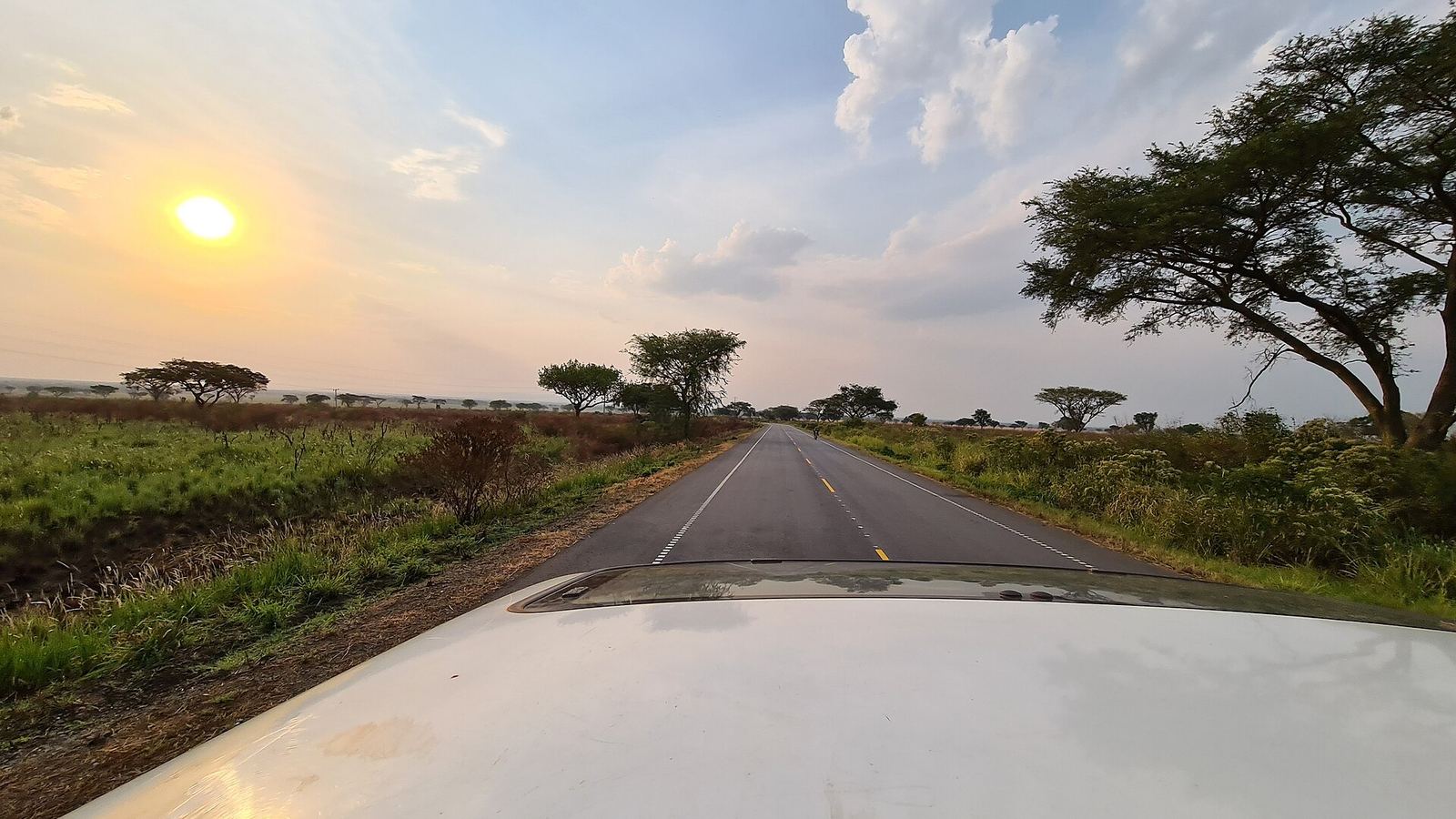
Is Uganda safe to travel?
Updated October 2026
🌐 Italiano · Français · Español
Is a guide mandatory in Uganda?
No, but strongly advised
At a glance, if you go with your own vehicle
- Roads: 16.0 deaths per 100,000 people a year, about 3.2 times Italy (5.0); WHO Africa region 19.4, world 15.0 (WHO estimate for 2021). (World Health Organization — Global status report on road safety 2023)
- Vehicle, drones and permits Vehicle insurance Drones Wild camping Off-road driving and protected areas Satellite phones what the official sources of the country say
- Overland regions
Advice from local guides
Wild Bridge Voyage
14 October 2026Driving on Uganda's heavily corrugated dirt roads, avoiding deep potholes, and navigating chaotic local traffic outside the parks is incredibly exhausting. … A breakdown in a remote area like Kidepo Valley can leave you stranded for days, and fuel stations disappear completely once you enter conservation zones, making spare jerrycans a strict necessity. … During the rainy seasons (April–May and September–November), standard tracks rapidly dissolve into treacherous mud or impassable "black cotton" soil. … Never drive between or inside parks after dark. Uganda’s roads are unlit, wildlife becomes highly active on the tracks, and nighttime driving is both illegal inside the parks and highly hazardous. Aim to be at your campsite by 4:00 PM. Before turning onto any remote track, always stop and ask the UWA park rangers at the gates about current road conditions. GPS maps do not account for a bridge that washed away the night before. A high-clearance 4x4 with a low-range gearbox is mandatory. Ensure your vehicle is equipped with a functional spare tire, a heavy-duty jack, a shovel, a tow strap, and plenty of extra drinking water and fuel.
Mathias Asiimwe
3 November 2026Having travelled extensively across Uganda, I recommend using a proper 4x4 vehicle, especially when visiting national parks and remote areas, as some roads become muddy, slippery and difficult to navigate during the rainy seasons. Always plan your fuel stops in advance, carry enough drinking water, and avoid long-distance driving at night because of poor road conditions, livestock and unexpected hazards. My biggest advice is not to underestimate driving distances and travel times in Uganda, particularly during the rainy season and uganda is the most safe country and it's people are hospitable.
Jerodi Africa Safari
3 November 2026In Uganda, always carry cash for fuel and fill up whenever you see a good station - the next one can be 150km away or out of fuel. During the rains (March-May and Oct-Nov), murram roads to parks become black cotton soil - even a strong 4x4 will get stuck without low range and experience. The mistake I see most: travelers rely only on offline maps; always ask at the last trading centre if a bridge or track is open, locals know before any app.
Ababa Uganda safaris
5 November 2026One of the most common mistakes travellers make is underestimating driving times. Uganda's roads can be unpredictable, particularly on routes leading to remote national parks such as Bwindi Impenetrable National Park, Mgahinga and Queen Elizabeth National Park. While some major highways are paved, access roads to parks and lodges can be rough, steep or muddy, especially during the rainy seasons from March to May and September to November. We strongly recommend travelling in a reliable 4x4 vehicle, allowing extra time for long journeys, refuelling in major towns before heading into remote areas, and avoiding unfamiliar rural roads after dark. In Uganda, a journey that looks short on the map can take considerably longer than expected, so planning around road conditions rather than distance alone makes a big difference.
Denis Galabuzi
5 November 2026One important thing travellers should know about Uganda is that road conditions can change depending on the season. During the rainy season, some rural roads and tracks, especially around national parks and remote communities, can become muddy and difficult to drive, so a 4x4 vehicle is highly recommended. Always plan your journeys with enough time, carry sufficient fuel and drinking water, and avoid driving long distances at night because of unexpected road conditions, animals and other road users.
Mystery Gorilla Safaris
8 November 2026Uganda's main highways are generally manageable, but once you leave the tarmac for rural roads, national parks and remote attractions, expect rough murram tracks, potholes, steep sections and occasionally muddy stretches. A proper 4x4 is essential, particularly during the rainy seasons (March–May and September–November), when some tracks become slippery or temporarily impassable. One of the biggest mistakes self-drive travellers make is underestimating distances and driving times: always allow extra hours, avoid driving after dark where possible, and never pass a fuel station in a remote area assuming the next one is just around the corner.
Musa Magumba
10 November 2026My advice to travellers exploring Uganda with their own vehicles is to plan their routes carefully, especially when visiting national parks and remote destinations, where 4x4 vehicles are highly recommended. The best time for self-drive adventures is generally during the dry seasons (June–September and December–February), when most roads and tracks are more accessible. Travellers should also plan their fuel stops in advance, obtain the necessary park entry permits and bookings, and avoid underestimating driving distances and road conditions, particularly in remote areas. Uganda is a beautiful country to explore independently, but good preparation, flexibility and respect for local road conditions make all the difference.
Priscilla Kamusiime
10 November 2026As a driver, do not expect every road to be in perfect condition. Some park tracks have steep slopes, loose stones, deep mud and potholes: drive slowly and carefully, especially when approaching bridges, sharp corners and steep sections, and do not leave designated tracks inside national parks. Always ask your guide, lodge or local authorities about road conditions before setting off, and make sure you have enough fuel when travelling to remote national parks. Don't rely on Google Maps in Uganda: if you are unsure about a location, ask around, because Ugandans are hospitable and always willing to help. And always have a paper map of Uganda: it will help where the internet fails you.
Judith Mirembe
11 November 2026The main highways and many roads in urban areas and major towns are paved. Some of the roads in rural areas are dirt: they tend to be slippery during the rainy seasons, hence the need for a 4x4, and dusty during the dry season, when AC comes in handy. Otherwise, the bumpy nature is a free African massage! When you have a challenge, local people are friendly and always there to give a hand, and it helps to have a local guide with you. We have two rainy seasons, March to May and September to November; the rains mostly fall in the early mornings and late afternoons. However, being in the tropics, with the influence of water bodies and forests, and with climate change, it can rain at any time, whatever the season. A valid driving permit is a must: traffic police are posted along the roads and always check drivers' permits. There are fuel points across the country, but always fill up the tank in the major towns, so that you don't run out of fuel with no station close by. Water is generally safe, but not for drinking: always take mineral, filtered or boiled water. Some places are far apart: take breaks along your journey for a coffee or tea, a supermarket, a washroom or a roadside market. The mistakes I see most often: leaving the car open, which tempts thieves, and leaving the roof open in the national parks, where baboons are always looking for a chance to grab the snacks in the car. I mean, who doesn't like a free meal?
Going with your own vehicle?
91 local guides on GuideMeet work in Uganda: they know the roads, the permits and the areas to avoid. You contact them directly, free and with no commission.
Al-Ikhlas Safaris U Ltd
Kampala, Uganda Mugisa Ronald
Fort Portal, Uganda Elly Mwesiga
Kampala, Uganda- Mystery Gorilla Safaris
Kabale, Uganda - Priscilla Kamusiime
Kampala, Uganda Primate Holidays
Uganda
Trips with local guides
Safety
Our summary of the country advice published by the Italian Ministry of Foreign Affairs (Viaggiare Sicuri) on 28 July 2026.
Travel outside cities
The ministry asks you not to travel outside the cities except in daylight and with more than one vehicle, or at least in company. For local transfers and for visiting national parks it says to use reliable agencies only, and to ask your own embassy before going into a park.
Congo border and parks
Rebel groups operating in the DRC can cross into Uganda. Maximum caution between Lake Albert and Lake Edward, including the Kasese and Ntoroko districts, the Rwenzori mountains and Semuliki national park, and above all after dark. Following the attack of 17 October 2023 on two foreign tourists and a local guide in Queen Elizabeth National Park, the same applies inside that park and around it.
Karamoja
In the Karamoja region on the Kenyan border there is illegal trafficking, cattle rustling and ambushes for robbery. Avoid moving at night, especially in remote areas away from settlements.
Terrorism
The risk of attacks by local cells linked to ISIS or the ADF is rising. It is highest near the borders with the DRC and South Sudan and in crowded urban places, and around religious holidays and anniversaries.
Crime in Kampala
Violent assaults, theft and pickpocketing are increasing in Kampala, particularly against foreigners. Walking around after dark is not advisable there or elsewhere.
Elections
Presidential and parliamentary elections are set for 15 and 16 January 2026, followed by local votes. Unrest of varying intensity is possible before and after, mostly in Kampala and the central region. Stay away from political rallies, crowds and military or police premises.
New on GuideMeet
 Exaudy Samuel
Arusha, Tanzania Stephen Mwakimonga
Arusha, Tanzania David: Skyway Expeditions ltd.
Rwanda
Before you rely on this
This is our summary of advice written by the Italian Ministry of Foreign Affairs for Italian travellers, published on 28 July 2026. We summarise in good faith, but we cannot guarantee it is accurate, current or complete, and we take no responsibility for decisions made on the basis of it. Rules change without notice and are applied by officials at the border, not by websites. Always read the original source and the travel advice your own government publishes for Uganda before you travel. Where a guide's profile shows “Licence verified”, we found that licence in the official public register; otherwise GuideMeet has no way of checking whether an individual guide meets any standard mentioned here — ask them directly.
Source: Viaggiare Sicuri — Italian Ministry of Foreign Affairs, updated 28 July 2026. Last checked by GuideMeet on 7 October 2026.