GuideMeet country page
Tunisia – overland guides and trips
A pure desert school where sand is the main character and technique makes the difference. From Douz to Sif Essouane, every dune demands precision, commitment, and control. If you can drive Tunisia, you can drive anywhere.
Local overland guides and active trips in Tunisia on GuideMeet.
As of October 2026: 29 local guides on GuideMeet operating in Tunisia — 19 4x4, 12 motorcycle, 14 camper / van, 12 bicycle.
Local overland guides in Tunisia
 Walymel Travel — Djerba, Tunisie · 4x4 car
Des aventures mémorables dans le Sud Tunisien ✨🇹🇳
- Nayer Benboubaker — Sabria, Tunisie
🌵✨ Nayer, passionné du désert et amoureux du Sahara tunisien, vous invite à vivre une aventure hors du temps en Tunisia. 🏜️ Guide spécialisé en circuits dése...
 Golden Dunes Voyages — Tozeur, Tunisie · 4x4 car
Agence de voyage basée à Tozeur, spécialisée dans les excursions dans le désert et le sud tunisien. � tourhq.com 👉 Elle propose : Excursions en 4x4 (Chebika,...
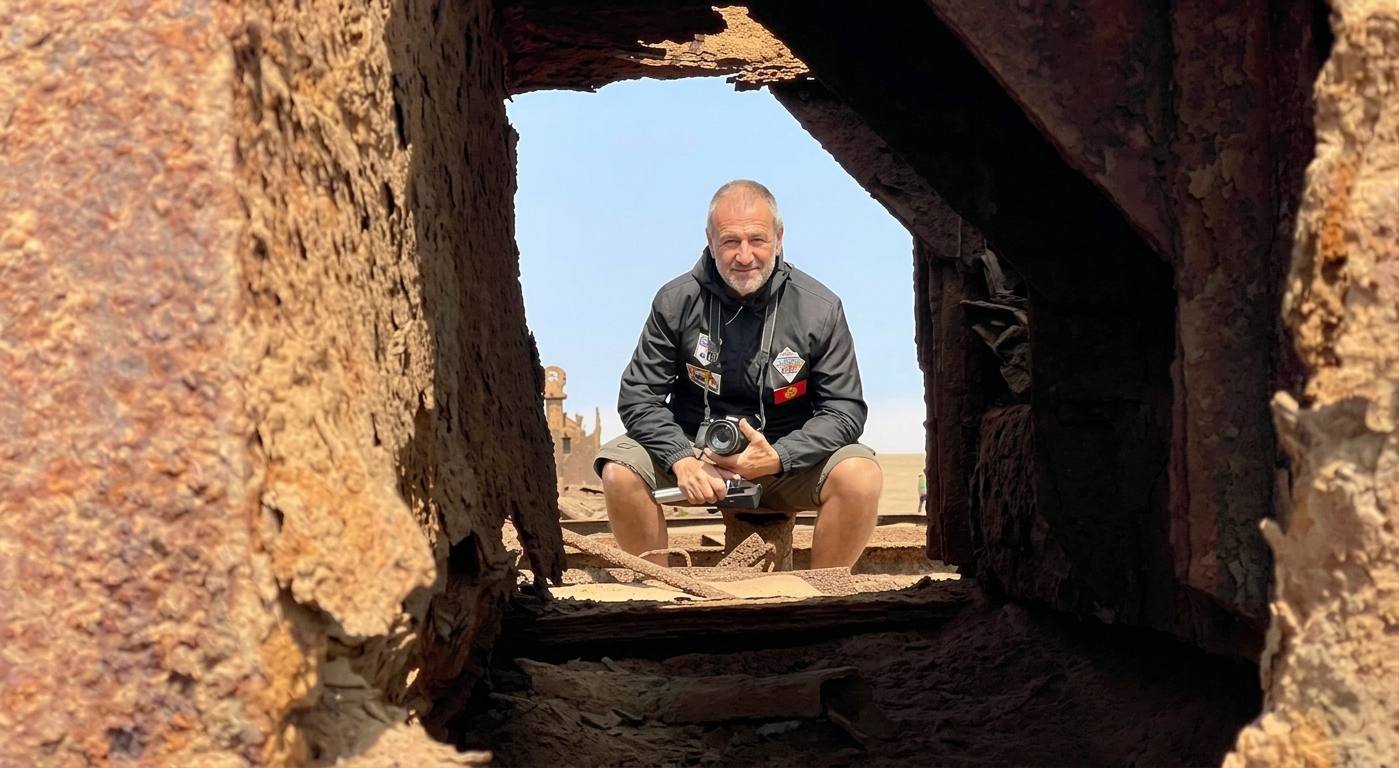 MAURIZIO TURCO — Roma, Italia · 4x4 car, 4x4 truck, 4x4 van, offroad motorcycle, adventure motorcycle, bicycle / e-bike
Senza mai cedere alle mode del momento, far strada dove la mappa diventa solo un’ipotesi è una vocazione che si affina unicamente con il tempo. È da questa con...
- Vibes Trip — Djerba, Tunisie
Vibes Trip Travel Agency est une agence de voyage dynamique et innovante basée à Djerba, Tunisie. Nous sommes spécialisés dans la création de voyages sur mesur...
- Mehdi Tanoubi — Tunis, Tunisie
Amoureux de la Nature, vous fait découvrir des paysages et pittoresques et authentique de la Tunisie profonde
- Tarek Rached — Douz, Tunisia · 4x4 truck, 4x4 car, offroad motorcycle, 4x4 van, adventure motorcycle
30 Years Experience Tours 4x4 , Motos, and Hiking, in the Sahara of the Jebil National Park, and Southern Tunisia Djerba/Matmata/Douz/ Tatouine/Tozeur. For res...
 Yasser Bachtoula — Douz, Tunisie · 4x4 car, 4x4 truck, camper / van, 4x4 van, offroad motorcycle, adventure motorcycle, bicycle / e-bike
Stars Desert Tunisia est une agence de voyages et DMC tunisienne basée à Douz, spécialisée dans le tourisme alternatif, durable, culturel et saharien. Nous con...
Active trips in Tunisia
- viste par voiture 4*4 sud tunisien · 4 days
- Tunisia
- Sif Essouane Express · 7 days
- 25 aprile sif
- Sahara Maktoub sabia al infenito solo sabia · 11 days
- 3-Day Private Sahara Adventure: Kairouan, Tozeur & Desert Camp · 3 days
Planning a trip in Tunisia?
Browse local guides for Tunisia and connect with experts who know the terrain, routes and border crossings. Or create your own trip and find travel companions.
Are you a local guide in Tunisia?
Join GuideMeet and get discovered by overland travelers looking for local knowledge, 4x4 support and expedition expertise in Tunisia.
Tunisia for overland travelers
Tunisia is one of those rare places where the desert is not just a landscape — it is the experience itself. For overlanders, 4x4 travelers and adventure riders, it offers something very specific: a concentrated, technical, and deeply authentic Sahara, where every kilometer matters and every mistake teaches you something.
At the heart of it all lies the Grand Erg Oriental, a vast and continuous sea of dunes stretching beyond the horizon. This is where Tunisia builds its reputation. The dunes here are not forgiving: steep approaches, sharp crests, and extremely soft sand on the leeward side. Driving is about precision — reading the terrain, managing momentum, and choosing the right line at the right moment. It's why many experienced travelers say: if you learn to drive in Tunisia, you can drive anywhere.
Everything starts in Douz, the true gateway to the desert. Just outside the town, the asphalt fades and the sand begins almost immediately. Douz is where expeditions take shape — vehicles are prepared, convoys are formed, and the transition from travel to adventure happens in a matter of kilometers.
From here, the desert unfolds in multiple directions. One of the most iconic is toward Tembaine, a solitary mountain rising out of the dunes like a natural beacon. Reaching it means crossing increasingly technical terrain, navigating through soft sand corridors and constantly shifting dune formations. It is both a destination and a reference point — a place that gives shape to the immensity around it.
Not far from these routes, hidden within the erg, lie the desert "lakes" such as Houidath Erreched. After hours of sand driving, encountering water and vegetation in the middle of the dunes feels almost unreal. These places define the rhythm of Tunisian desert travel: long, demanding sections followed by moments of stillness and contrast.
For those looking for a real challenge, few names carry as much weight as Sif Essouane. This is not just another beautiful area — it is a proving ground. Long, knife-edged dunes require commitment and control, with little margin for error. Crossing this region is considered by many a milestone, where desert driving becomes a discipline rather than a pastime.
Further south, the landscape opens toward El Borma, near the Algerian border. This is expedition territory: long distances, deep isolation, and a sense of operating at the edge of the map. The terrain alternates between dunes, hard desert, and remote tracks, demanding planning, autonomy, and mechanical reliability.
What makes Tunisia particularly compelling is that it is not only sand. The country offers a strong backbone of asphalt routes that connect the desert to a wider network of destinations: the salt flats of Chott el Jerid, the oases of Tozeur and Nefta, the ksour and desert villages of the south, and the rugged landscapes of the Dahar plateau. This creates a unique travel rhythm — technical off-road sections seamlessly linked by fast road transfers — making Tunisia both accessible and intense.
There is also a deeper layer of history embedded in the terrain. Tracks and remote areas still carry the memory of the North African campaign, including the route known as the Piste Rommel and the broader geography of the Mareth Line. Driving here is not only about the landscape, but about moving through places shaped by both nature and history.
For travelers, however, one of Tunisia's greatest assets is not just the terrain — it is the people who know how to read it. Across the south, there is a dense network of local guides, many of whom have spent their entire lives driving these dunes. They operate independently, often with their own Land Cruisers or desert-prepared vehicles, and possess a level of knowledge that is impossible to replicate through maps alone.
This is exactly where GuideMeet becomes a game changer. Instead of relying on fragmented contacts or word of mouth, travelers can directly find and connect with these local guides — people who know specific dune systems, seasonal conditions, and safe routes through even the most technical areas. In a place like Tunisia, where the difference between a good line and a wrong one can define an entire day, access to the right guide is not a luxury — it is what unlocks the experience.
In the end, Tunisia is a destination that strips travel down to its essentials. Sand, navigation, technique, and progression. It is not about covering distance, but about learning how to move through a demanding environment. Morocco may introduce you to the desert — Tunisia teaches you how to master it.
Before you go: learn to drive on sand
New to dunes and desert pistes? Read our practical handbook: Sand driving in a 4x4 — the complete guide (tire pressures, dunes, getting unstuck, recovery, vehicle prep).
Travelling with a local guide
Not sure whether you need a guide, or how to pick one you have never met? Travelling with a local guide covers when a guide is genuinely needed, what to check before leaving (permits, vehicle, emergency contacts) and how to agree price and exceptions.
Frequently asked questions
How do I find overland guides in Tunisia on GuideMeet?
Browse local guides for Tunisia on GuideMeet, compare their experience, vehicles and languages, and message them directly to plan routes, permits and border crossings. As of October 2026, there are 29 local guides on GuideMeet operating in Tunisia (19 4x4, 12 motorcycle, 14 camper / van, 12 bicycle).
How much does it cost to contact a guide in Tunisia?
Nothing — GuideMeet is free and takes no commission. You contact the guide directly on the platform and agree terms between yourselves, with no middleman.
Are you a local guide in Tunisia?
Join GuideMeet and get discovered by overland travelers looking for local knowledge, 4x4 support and expedition expertise in Tunisia.