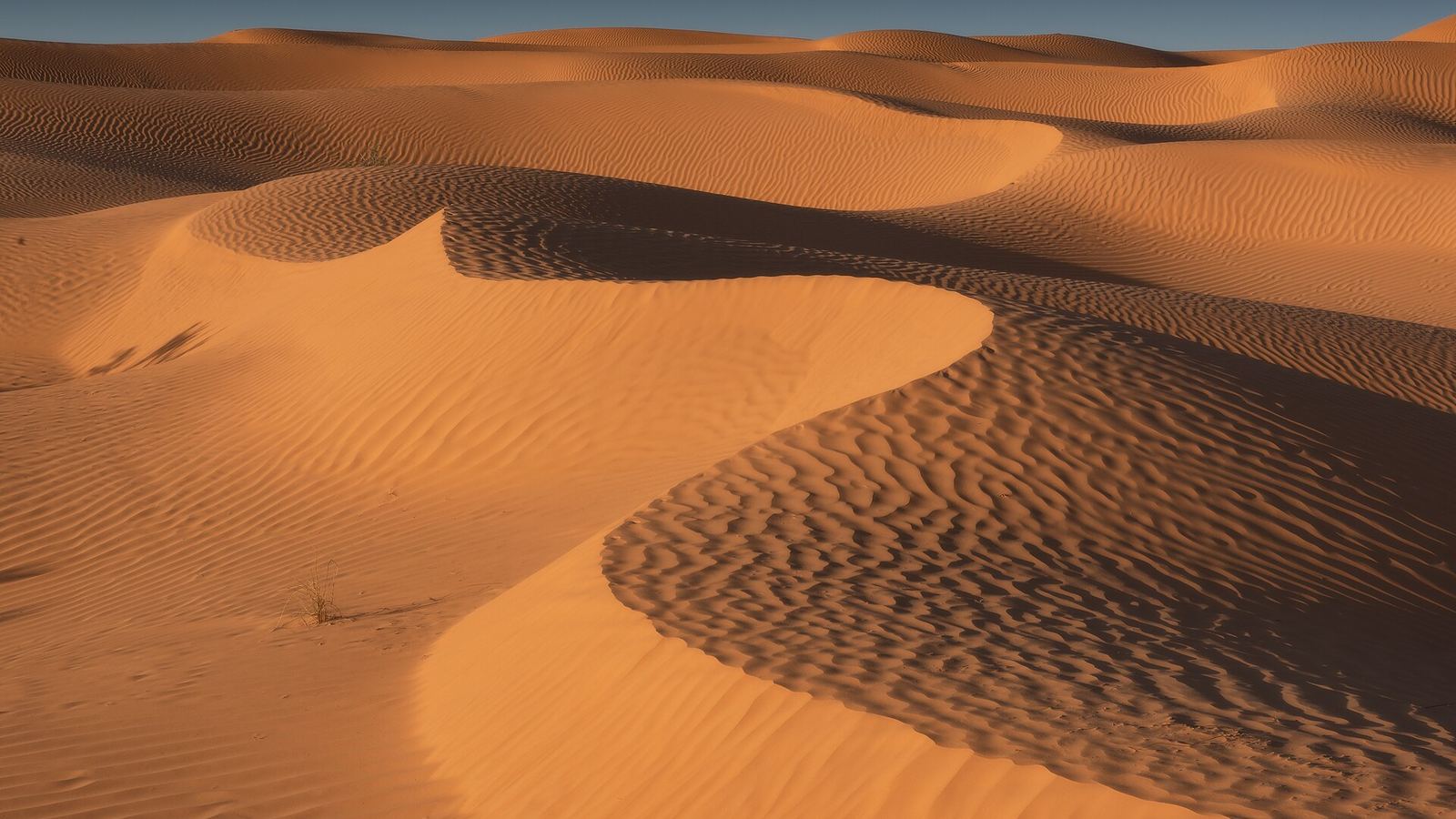
Do you need a local guide in Tunisia?
🌐 Italiano · Français · Español
Is a guide mandatory in Tunisia?
No, but strongly advised
There is no general legal obligation, but for the desert the answer is close to yes. The Italian foreign ministry advises against trips and travel in desert and pre-desert areas unless you travel in a substantial group organised by a reputable local tour operator, and, for desert trips, recommends reporting your presence at the nearest National Guard barracks. Driving your own vehicle is provided for: Tunisian Customs issues non-residents a three-month circulation permit for their car or motorbike, the "Diptyque", at the border.
Why it matters in Tunisia
Desert only in organised groups
The Italian foreign ministry describes the desert as isolated, with no patrolled roads, and reports rising common crime there. It advises against trips and travel in desert and pre-desert areas unless you are part of a substantial group organised by a local tour operator of clear reputation and professionalism. (Viaggiare Sicuri — Italian Ministry of Foreign Affairs)
Your vehicle runs on a customs clock
Tunisian Customs gives non-residents arriving with a car or a motorbike over 49 cc a circulation permit, the "Diptyque", valid for three months. It can be extended three consecutive times, with road tax due at the first extension, when customs also assign special "sous douane" number plates that must be handed back when the vehicle leaves. Once the permit expires, the vehicle has to leave the country. (Tunisian Customs (Douane Tunisienne) — Véhicule)
The vehicle must leave with its driver
According to the Italian foreign ministry, the vehicle is noted on the passport and you have to leave the country with that same vehicle: if for any reason, theft included, that is not possible, customs demand a sum equal to its market value before authorising departure; in case of need the vehicle can be left in deposit with customs, against a guarantee. Anyone driving a vehicle that is not their own must hold an authorisation to drive it with a certified signature. After a serious road accident causing the death of a Tunisian citizen, the driver, foreigners included, is initially placed under precautionary arrest. (Viaggiare Sicuri — Italian Ministry of Foreign Affairs)
Borders, military zones and unrest
The ministry advises against approaching the Libyan border crossings and against travel along the Algerian and Libyan borders in the governorates of Tozeur, Kebili, Tataouine and Medenine. It also advises against moving around or taking excursions in areas next to the Algerian border, in particular the mountain, desert and hill zones near Ghardimaou/Ain Soltane and in the governorates of El Kef, Kasserine, Kebili and Tataouine. Because of economic and social hardship and demonstrations with episodes of violence, it also advises against going to some areas of Tunis (Etthadamen and El Intilaka) and of Kasserine. It recommends not crossing isolated areas of the country, especially at night. Several places in the isolated mountain areas of El Kef, Kasserine and Sidi Bouzid (Bir Lahfay, Sidi Ali Ben Aoun, Sidi Ich, Jebel Oudada, Jebel Ghardek, Jebel Kemayem and Jebel Rakhmet) are military operations zones, and the ministry advises against approaching them. Where those lines fall on the ground is local knowledge. (Viaggiare Sicuri — Italian Ministry of Foreign Affairs)
Checkpoints and the National Guard
The state of emergency declared in 2015 has been extended ever since, and main roads are heavily watched, with checkpoints manned by uniformed and plain-clothes officers whom the ministry asks you to cooperate with fully. For desert trips it recommends a 4x4 and reporting your presence at the nearest National Guard barracks. (Viaggiare Sicuri — Italian Ministry of Foreign Affairs)
What to ask a guide before you book
- Who organises the desert leg, and how large will the group be?
- Will you report our presence at the nearest National Guard barracks before we head into the desert?
- Which regional customs office should I name at the border to extend the Diptyque if we stay beyond three months?
- Does the route keep clear of the border areas and military zones the Italian ministry lists?
Sources
- Tunisian Customs (Douane Tunisienne) — Véhicule — consulted 21 September 2026
- Viaggiare Sicuri — Italian Ministry of Foreign Affairs — consulted 9 November 2026, updated 30 September 2026
Local guides in Tunisia
37 independent local guides work in Tunisia on GuideMeet. You contact them directly: free, no commission. See the guides in Tunisia
 Turista Travel
Douz, Tunisia Stars Desert Tunisia
Douz, Tunisie Jebil Park
Douz, Tunisia Souheil Najjar
Tunis, Tunisie Abdelkader Masmoudi
Sfax, Tunisie Seif Ben helel
Djerba, Tunisie
Trips with local guides
- EXPÉDITION 4X4 : DOUZ – ZMELA – EL MIDA – GARAAT ABDERRAHIM ; 4 jours / 3 nuits – Au cœur du Grand…
- Douz Tembaine Douz
- Tunisian Sahara 4x4 Adventure – Discover the Real Desert
- Patrimoine berbère du Sud tunisien : Djerba-Matmata-Toujane-Tataouine et les ksour…
New on GuideMeet
 Esprit du Désert
Kebili, Tunisie Golden Dunes Voyages
Tozeur, Tunisie Masoud Ragab
Zuwara, Libya
Before you rely on this
This page summarises official sources in good faith, on the dates shown above. We cannot guarantee it is accurate, current or complete, and we take no responsibility for decisions made on the basis of it. Rules change without notice and are applied by officials on the ground, not by websites. Always read the original sources and your own government's travel advice for Tunisia before you travel. Where a guide's profile shows “Licence verified”, we found that licence in the official public register; otherwise GuideMeet has no way of checking whether an individual guide holds a licence or meets any standard mentioned here — ask them directly.