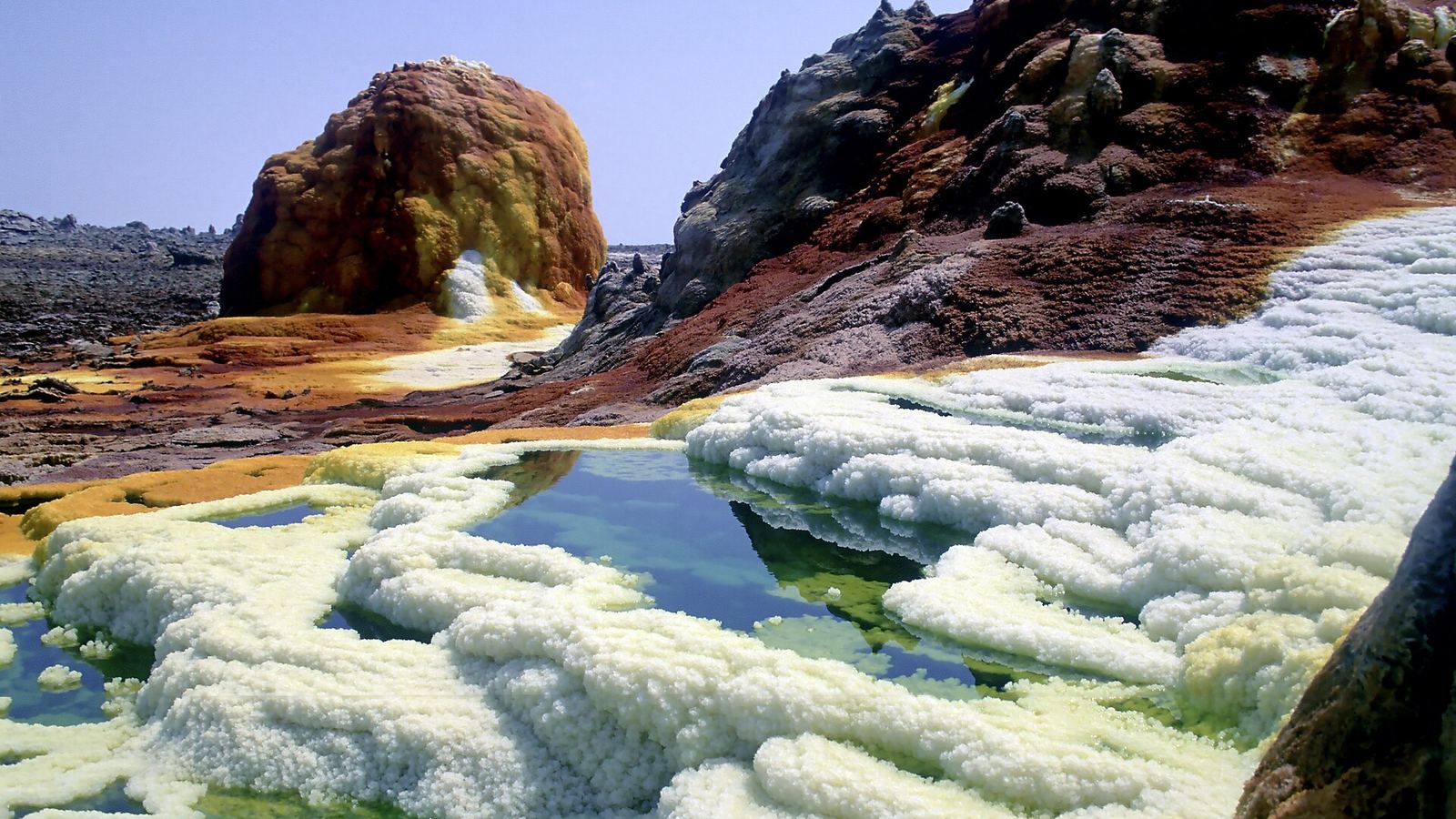
Is Ethiopia safe to travel?
Updated October 2026
🌐 Italiano · Français · Español
Is a guide mandatory in Ethiopia?
Yes, but only in some areas or activities
Simien Mountains National Park (licensed scout)
What governments say
The travel advice level each government gives for Ethiopia, in its own words (for the United Kingdom, a summary by GuideMeet). Levels are not comparable between countries. Checked by GuideMeet on 4 November 2026.
| Government | Advice | Updated | Official page |
|---|---|---|---|
| United Kingdom (FCDO) | Advises against all travel to parts of the country Advises against all but essential travel to parts of the country Some areas have different advice: see the official page. | Read the advice | |
| United States (State Department) | Level 3: Reconsider Travel | Read the advice | |
| Canada (Global Affairs Canada) | Avoid non-essential travel Some areas have different advice: see the official page. | Read the advice | |
| Australia (Smartraveller) | Reconsider your need to travel | Read the advice | |
| France (France Diplomatie) | See the zone map | Read the advice |
Contains public sector information licensed under the Open Government Licence v3.0. Contains information licensed under the Open Government Licence – Canada. Source: Department of Foreign Affairs and Trade's Smartraveller website, licensed under CC BY 4.0. Source: France Diplomatie, Ministry for Europe and Foreign Affairs, Licence Ouverte 2.0, updated 30 September 2026.
At a glance, if you go with your own vehicle
- Roads: 17.7 deaths per 100,000 people a year, about 3.5 times Italy (5.0); WHO Africa region 19.4, world 15.0 (WHO estimate for 2021). (World Health Organization — Global status report on road safety 2023)
- Vehicle, drones and permits Vehicle insurance Off-road driving and protected areas Satellite phones what the official sources of the country say
- Overland regions
Advice from a local guide
Eshetu Getachew
5 November 2026When travelling with your own 4x4, motorcycle or camper, always plan fuel, drinking water and overnight stops carefully, as distances between reliable services can be long, particularly in remote areas. In Ethiopia, road conditions can change significantly between highlands, rural areas and lowland regions. … My strongest advice is not to underestimate driving times, check local road and security conditions before departure, and always ask local people about the latest conditions rather than relying entirely on GPS or online maps.
Going with your own vehicle?
16 local guides on GuideMeet work in Ethiopia: they know the roads, the permits and the areas to avoid. You contact them directly, free and with no commission.
 Taddese Atlaw
Addis Ababa, Ethiopia 4x4 Ethiopia Tours
Addis Ababa, Ethiopia- Eshetu Getachew
Addis Ababa, Ethiopia  Emanuel Cheneke
Jinka, Ethiopia Haile Demewoz
Addis Ababa, Ethiopia Aone Ethiopia Tours
Addis Ababa, Ethiopia
Trips with local guides
Safety
Our summary of the country advice published by the Italian Ministry of Foreign Affairs (Viaggiare Sicuri) on 5 October 2026.
Fighting in the north
Since the start of August 2026 northern Ethiopia, in particular the whole of Tigray and the border areas between Tigray, Amhara and Afar, has seen new intense armed clashes and numerous drone attacks. Regional tensions have risen sharply, in particular with Eritrea, Sudan and Egypt, after the closure of the Ethiopian embassy in Asmara and the expulsion of Eritrean diplomats, and they weigh on security in Tigray as well. The many actors involved in the country's conflicts (federal forces, regional forces, regular and irregular militias) make the situation particularly complex and unpredictable.
Amhara, Tigray and Afar
All travel to the Amhara region is advised against: hardline armed groups opposed to the federal authorities are active there, armed clashes have increased sharply, some of them inter-ethnic, and violent clashes have hit Bahir Dar, Gondar and Lalibela. The areas bordering western Tigray remain especially exposed, with armed clashes between local militias and federal troops. All travel to Tigray is advised against as well: security across the region keeps worsening after armed clashes resumed between regional militias and the federal army, and some areas on the Tigray-Afar border have seen recent fighting. All travel to Afar is advised against too: after recent armed clashes on the borders with Tigray and Eritrea, security has deteriorated deeply and militarisation is growing.
Tigray and Afar permit
Since 11 May 2025 the Ethiopian authorities require a specific authorisation from foreigners who want to go to the Tigray and Afar regions.
Omo Valley
Since late 2024 groups of tourists have been attacked and even kidnapped in the Omo Valley, and foreign tourists have been killed. The attacks are for robbery or extortion, and the ministry points to a worsening of security in an area considered touristic until now.
Oromia: fly, don't drive
In Oromia the advice is to avoid non-essential road journeys and to move by air instead. Some areas have inter-ethnic tensions, partly linked to the presence of armed groups of the Oromo Liberation Army, and flash kidnappings have been reported, including of foreigners, particularly on the slower intercity roads. Stay in the main hotels, the ones with security at the entrance, and avoid areas next to military buildings and posts.
Border areas
Serious security risks exist along the borders with Eritrea, Sudan, South Sudan and Somalia, because of non-governmental armed groups and cross-border and inter-ethnic tensions. All travel is advised against to the areas near Somalia (the Somali region/Ogaden), where the regular army and armed opposition groups often clash, as do the Somali and Oromo ethnic groups, and where a kidnapping risk for westerners has been reported repeatedly around Dolo Ado. All the zones along the Sudanese border are advised against too, because of the conflict in Sudan, and the border is currently not crossable.
Gambella and the west
Travel is advised against to the Gambella region, in the zone bordering South Sudan, where inter-ethnic tensions are tied to the massive presence of South Sudanese refugees fleeing civil war and a dire humanitarian situation. Gambella and Benishangul-Gumuz, in the west, also feel the effects of the war in Sudan and of inter-ethnic tensions, with some recent armed clashes, above all around Gambella.
Addis Ababa
Common crime is on the rise, including in daylight, in the crowded central districts and around Merkato, Bole and, recently, the Entoto park area. Stay on the main streets, take care on foot (carrying bags is not advised) and avoid walking at night. Because of clashes outside the mosques in the Merkato area, the advice is to avoid it, particularly on Fridays, when the crowds of worshippers are biggest. Car journeys at night are discouraged everywhere in the country.
Checkpoints and confiscations
Security posts continue to increase in Addis Ababa and on the roads into the city. Although the number is lower than in the recent past, incidents against foreigners are reported, such as demands to search vehicles and private flats and the confiscation of radios, electronic equipment and foreign currency. At checks, follow the instructions of the local authorities and cooperate with law enforcement, and avoid areas next to military buildings and posts.
Terrorism
People linked to Islamic terrorist organisations have for some time been pursuing hostile plans in the capital and in the rest of the country, and the Ethiopian government has flagged the threat of possible attacks on several occasions; checks in the capital are always strict. In Addis Ababa the advice is to keep off public transport. Where you must go to crowded places, public buildings and places of worship included, take the greatest care and prefer venues with adequate security. Elsewhere in the country take care on the move.
Earthquakes and locusts
The country is exposed to seismic risk: the Fentale volcanic complex, in the Main Ethiopian Rift, has recently shown increased seismic activity, and earthquakes have become more frequent in recent years, with several magnitude 5 events in 2025. The north in particular can be hit by periodic locust invasions.
New on GuideMeet
 Musa Magumba
Kampala, Uganda Emmanuel Ndeleva
Nairobi, Kenya
Before you rely on this
This is our summary of advice written by the Italian Ministry of Foreign Affairs for Italian travellers, published on 5 October 2026. We summarise in good faith, but we cannot guarantee it is accurate, current or complete, and we take no responsibility for decisions made on the basis of it. Rules change without notice and are applied by officials at the border, not by websites. Always read the original source and the travel advice your own government publishes for Ethiopia before you travel. Where a guide's profile shows “Licence verified”, we found that licence in the official public register; otherwise GuideMeet has no way of checking whether an individual guide meets any standard mentioned here — ask them directly.
Source: Viaggiare Sicuri — Italian Ministry of Foreign Affairs, updated 5 October 2026. Last checked by GuideMeet on 7 October 2026.