GuideMeet country page
Turkiye – overland guides and trips
Turkiye is a major hinge for routes between Europe, the Caucasus, and the Middle East. Use GuideMeet to find local guidance and trip companions before you head further east.
Local overland guides and active trips in Turkiye on GuideMeet.
As of October 2026: 3 local guides on GuideMeet operating in Turkiye — 1 4x4, 2 motorcycle, 2 camper / van.
Local overland guides in Turkiye
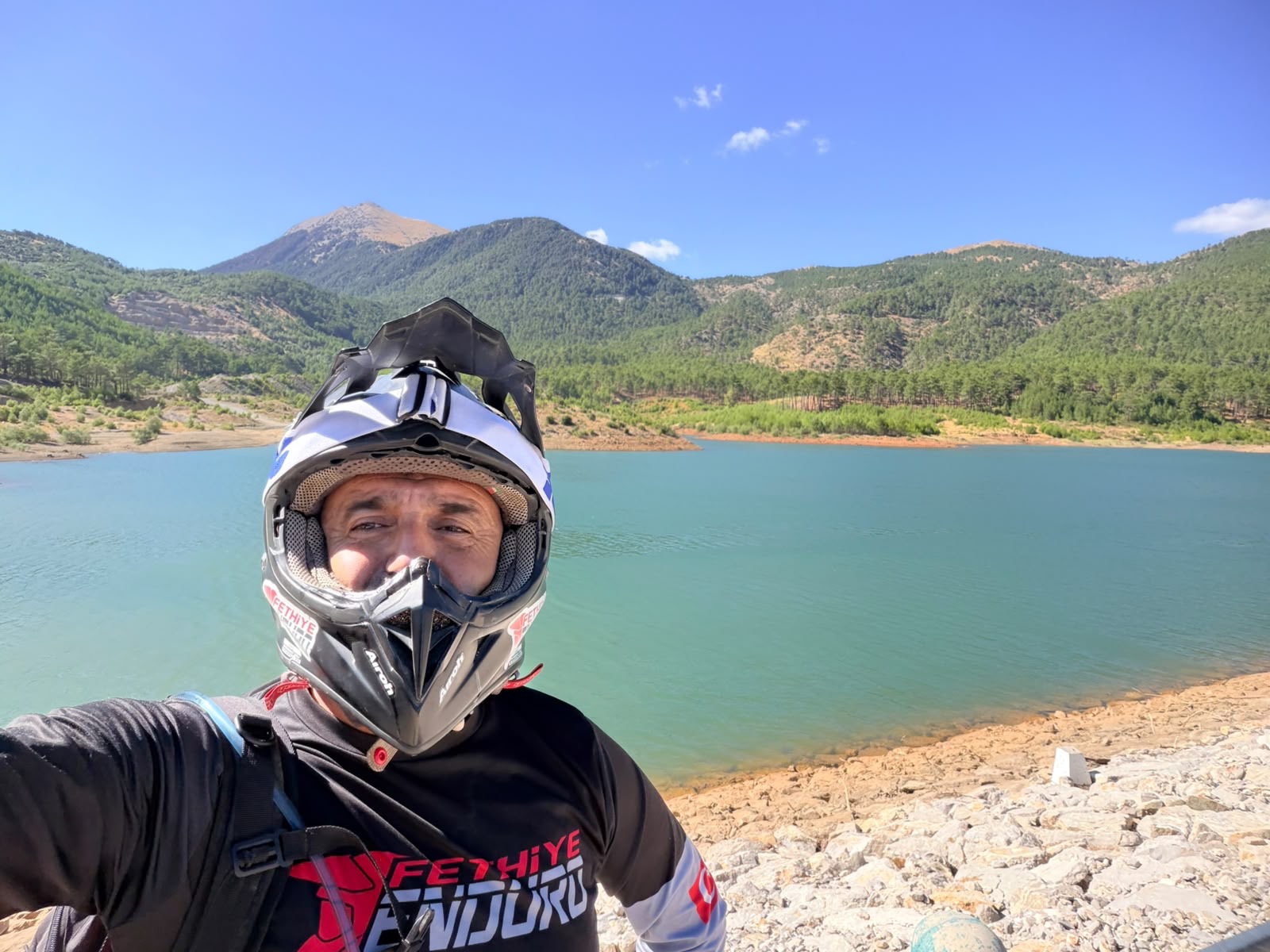 Ahmet Selim — Fethiye, Türkiye · 4x4 truck
Hello! I’m Ahmet, your local guide in Turkey. f you are looking to explore stunning coastlines, hidden mountain tracks, and breathtaking viewpoints on two whee...
 Tumer Gundem — Istanbul, Türkiye · adventure motorcycle, camper / van
We are a professional team that has carried out the planning, budgeting and execution of numerous national and international organizations in the field of moto...
More local guides in Turkiye (1)
Active trips in Turkiye
- Istanbul
Planning a trip in Turkiye?
Browse local guides for Turkiye and connect with experts who know the terrain, routes and border crossings. Or create your own trip and find travel companions.
Are you a local guide in Turkiye?
Join GuideMeet and get discovered by overland travelers looking for local knowledge, 4x4 support and expedition expertise in Turkiye.
Turkiye for overland travelers
Turkiye is the only country on Earth that is genuinely both European and Asian, not as a cultural metaphor but as a physical and logistical reality. For overland travelers, this geographic identity translates into something concrete: Turkiye is not just a destination but a pivot. Every major overland route heading east from Europe passes through it, and every route heading west from Central Asia, the Caucasus, or the Middle East converges on it. To understand Turkiye as an overlander is to understand it as a system of crossings, corridors, and transitions — a country where the journey itself is constantly transforming.
The approach from Europe typically enters through Edirne, the last Turkish city before the Bulgarian and Greek borders, and leads quickly toward Istanbul. The Bosphorus crossing is one of the great logistical moments in overland travel: two continents connected by a bridge, the Asian shore visible from the European one, and the city sprawling across both. For vehicles, the crossing is straightforward — the bridges carry enormous traffic volumes and the process is mechanical — but the symbolic weight is real. Most overlanders feel it: something shifts when you cross the Bosphorus heading east, and that shift does not unwind easily.
Istanbul itself is more logistical node than destination for serious overlanders. It deserves time — the Grand Bazaar, the Bosphorus ferries, the old city — but the mechanics of being there with a vehicle require attention. Parking is difficult, traffic is dense, and the urban infrastructure is designed around a city of twenty million people, not expedition vehicles. Practical strategy: stop at the edges, take public transport or a taxi into the center, and treat Istanbul as a break from driving rather than a driving destination.
From Istanbul, the classic overland route east follows the D100 and its successors toward Ankara, the functional capital and a useful service stop for fuel, vehicle parts, and resupply. Ankara is not scenic but it is practical, and the mechanics there are familiar with the full range of vehicles that pass through — from classic Land Cruisers and Defenders to modern expedition platforms and adventure motorcycles.
East of Ankara, Turkiye's character begins to reveal itself. Cappadocia is the most internationally recognized landscape: the fairy chimneys, the tufa valleys, the cave churches of Göreme, and the extraordinary otherworldly quality of a terrain shaped by volcanic eruption and millennia of erosion. For overlanders, Cappadocia is not technically demanding — the roads are paved and well-maintained — but the experience is dense. The valley tracks, the sunrise balloon flights visible from any vantage point, and the sense of moving through a landscape that genuinely has no equivalent elsewhere in the world make it a fixed point in any serious itinerary. Ürgüp and Göreme are functional bases with good accommodation infrastructure for overlanders.
Beyond Cappadocia, the route continues east through the central Anatolian plateau — a landscape of open steppe, agricultural plains, and long distances that builds a particular rhythm. This section of Turkiye is often described as monotonous, but experienced travelers know better: the light here at dusk and dawn is extraordinary, the road culture is interesting, and the towns along the way — Sivas, Erzincan, Erzurum — have a character shaped by altitude, climate, and distance from the coast that feels very different from western Turkiye.
Erzurum is the gateway to Eastern Anatolia, and everything changes east of it. The landscape becomes higher, more dramatic, and more austere. The Palandöken mountains near Erzurum give way to volcanic massifs, high plateaus, and — in the right conditions — views of Mount Ararat, the 5,137-meter volcanic cone that defines the far eastern horizon and carries one of the most powerful symbolic weights of any mountain in the overland world. The approach to Doğubayazıt, the last major town before the Iranian border, passes through some of the most striking terrain in Turkiye: open plains, ancient ruins including the extraordinary İshak Paşa Palace, and the constant presence of Ararat against the sky.
The Black Sea coast road deserves separate attention. The route along the northern coast — connecting Trabzon, Rize, and the tea-growing highlands above them — is one of the most dramatic coastal drives in Europe or Asia. The mountains drop almost directly into the sea, the road clings to cliff faces, and the interior valleys are almost impossibly green after the aridity of the plateau. For motorcyclists in particular, this route is legendary: tight curves, dramatic drops, and a constant succession of waterfalls and forested gorges. The Kaçkar Mountains, accessible from the coast road, offer 4x4 and trekking routes into high alpine terrain that most travelers never see.
The border situation in eastern Turkiye requires careful current research. The Iranian border at Gürbulak near Doğubayazıt is the primary crossing for overlanders heading to Central Asia. It functions, but documentation requirements — carnet de passage, vehicle registration, insurance, visas — must be complete and current. The Georgian border at Sarp on the Black Sea coast, and at Türkgözü and Vale further inland, is significantly more accessible for travelers and processes faster. The Armenian border at Alican remains closed. The borders with Iraq (at Habur/Ibrahim Khalil) and Syria are not appropriate for independent overland travel given current conditions and have not been so for years.
Vehicle documentation in Turkiye is handled through a well-established system. Foreign-registered vehicles can enter on the driver's home country license and vehicle registration, and are tracked through an entry stamp in the passport that must be matched on exit. Turkiye is a signatory to the carnet de passage system, which is required for onward travel to Iran. Insurance: Turkish third-party insurance is required and available at the border for minimal cost. For mechanical support, the country is exceptionally well served: nearly every vehicle platform is represented in Turkish workshops, and the culture of vehicle maintenance — particularly for the heavy commercial vehicles that form the backbone of long-haul transport — means mechanical competence is distributed even in smaller cities.
The overlander culture in Turkiye is mature and internationally connected. The country has been a waypoint on the overland trail for decades, from the hippie trail of the 1970s through the present day, and this creates layers of infrastructure: established camping spots with GPS coordinates shared across communities, guesthouses that understand the needs of vehicle travelers, and an informal network of local contacts — variously described as fixers, guides, or simply friends — who can provide logistical support, local knowledge, and genuine companionship on the road. In cities like Istanbul, Göreme, Erzurum, and Doğubayazıt, these networks have existed for long enough to be genuinely useful rather than merely commercial.
GuideMeet operates precisely in this ecosystem. The platform connects overlanders with local guides and travel companions across Turkiye — people who know the Cappadocia valleys, the Black Sea mountain roads, the Eastern Anatolian plateau crossings, and the border logistics at Gürbulak and Sarp in depth. For a traveler approaching Turkiye from Europe, the difference between arriving with a connection and arriving without one is often the difference between a smooth transition and days of logistical confusion. For a traveler attempting the Iran crossing for the first time, having local knowledge about current procedures, document requirements, and crossing timing is not a luxury — it is what makes the crossing possible. Turkiye is the hinge of the eastern overland world, and GuideMeet is how you find the people who know how the hinge works.
Travelling with a local guide
Not sure whether you need a guide, or how to pick one you have never met? Travelling with a local guide covers when a guide is genuinely needed, what to check before leaving (permits, vehicle, emergency contacts) and how to agree price and exceptions.
Frequently asked questions
How do I find overland guides in Turkiye on GuideMeet?
Browse local guides for Turkiye on GuideMeet, compare their experience, vehicles and languages, and message them directly to plan routes, permits and border crossings. As of October 2026, there are 3 local guides on GuideMeet operating in Turkiye (1 4x4, 2 motorcycle, 2 camper / van).
How much does it cost to contact a guide in Turkiye?
Nothing — GuideMeet is free and takes no commission. You contact the guide directly on the platform and agree terms between yourselves, with no middleman.
Are you a local guide in Turkiye?
Join GuideMeet and get discovered by overland travelers looking for local knowledge, 4x4 support and expedition expertise in Turkiye.