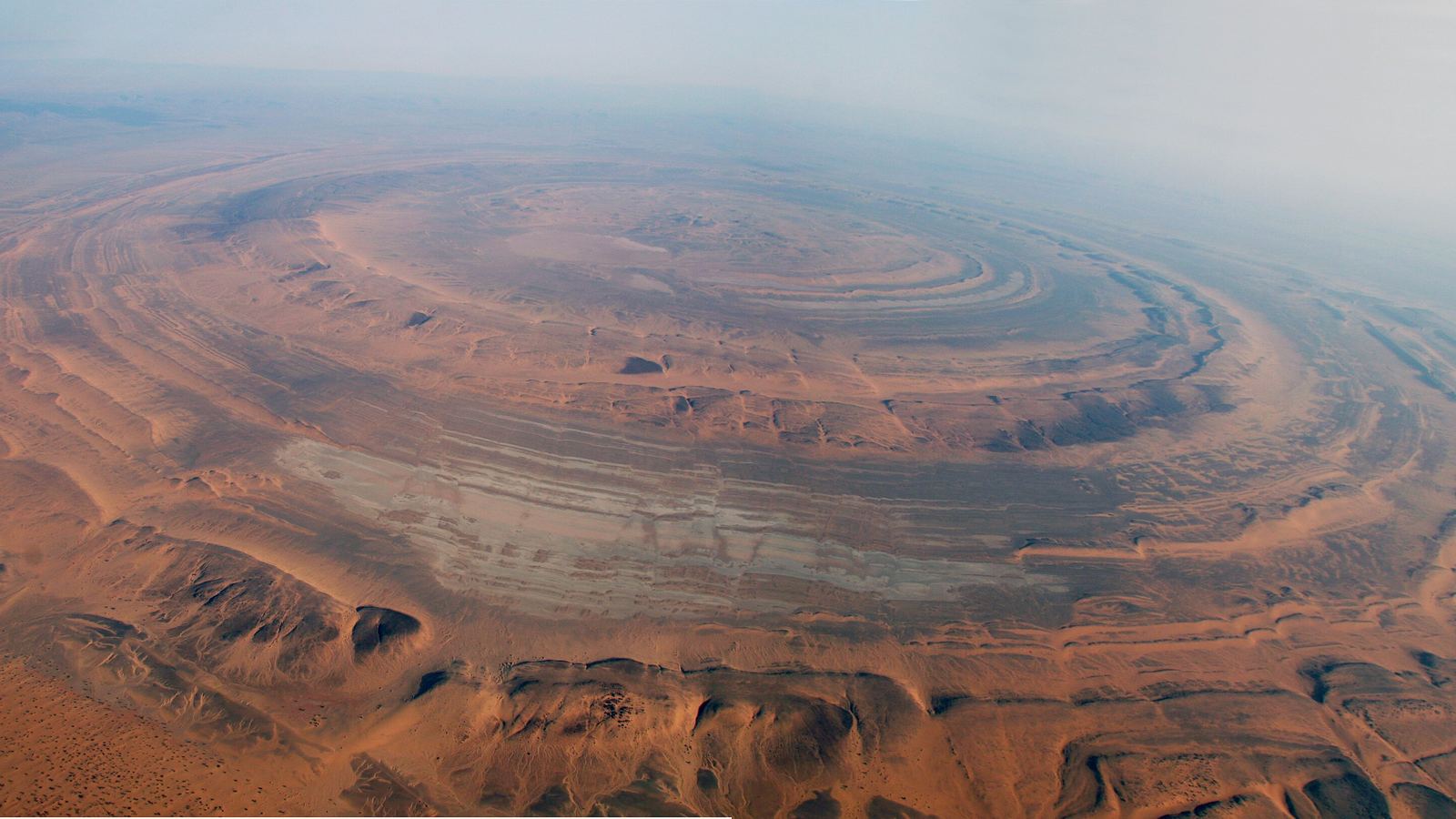
Do you need a local guide in Mauritania?
🌐 Italiano · Français · Español
Is a guide mandatory in Mauritania?
No, but strongly advised
Neither official source makes a guide compulsory across the country. The Italian foreign ministry absolutely advises against individual tourism, especially by car in desert areas, and advises against desert trips without operators of proven professionalism. On the Banc d'Arguin the two differ: the ministry advises two vehicles and experienced guides in areas without paved roads, such as the park; the park says a guide is indispensable on a first visit, and every vehicle entering needs its authorisation.
Why it matters in Mauritania
The park itself asks for a guide
For a first visit to the Banc d'Arguin National Park, the park authority calls a guide indispensable and recommends a 4x4 and GPS. Every vehicle or boat brought into the park needs a PNBA authorisation, issued once the access fees are paid; driving off the authorised tracks and landing on the islands are not allowed, and photography and sound recording need the park's prior authorisation. (Parc National du Banc d'Arguin (PNBA) — Nous visiter)
Convoy, never solo
For long overland stages the Italian foreign ministry recommends a convoy of more than one vehicle, if possible with local drivers arranged through large hotels or reputable travel agencies, and never at night. Where there is no paved road, as in the Banc d'Arguin, it advises two vehicles and experienced guides. (Viaggiare Sicuri — Italian Ministry of Foreign Affairs)
Regions advised against
The Italian foreign ministry advises against all travel north of Zouerate, north-east of the Zouerate to Ghallaouia line, east of the Ghallaouia to Akhrejit line, south-east of the Akhrejit to Kankossa line and in the belt along the Mali border. It strongly advises against approaching the Mali border: any overland transfer to or from Mali could only go through Senegalese territory, and Mali itself remains a destination advised against for any purpose. It absolutely advises against travel at the borders with Algeria and Western Sahara. Except for reasons of absolute necessity, it also advises against going north of the Choum to Aghouedir line, east of the Aghouedir to Tichit line and south-east of the Tichit to Kaedi line, including the wilayas of Assaba, Gorgol and Guidimaka. (Viaggiare Sicuri — Italian Ministry of Foreign Affairs)
A military zone and old minefields
The authorities have declared a military zone bounded to the east and north by the national borders, to the west by the 10th meridian and to the south by the 18°40' parallel, and the Mauritanian defence ministry treats anyone transiting it as a military target. Minefields from the mid-1970s are still not fully cleared in the north, and near the PK55 border point at Nouadhibou the ground beside the main road is mined, so it is imperative not to leave the main road. The Italian foreign ministry also recommends avoiding all non-essential travel in the area from the Nouadhibou border with Western Sahara (PK55) up to Zouerate. (Viaggiare Sicuri — Italian Ministry of Foreign Affairs)
Help is far away
Desert trips without professional operators are advised against for accidents and medical emergencies as much as for security, because help may be hard to reach. Only 866 of about 7,660 km of roads are paved, and phone and internet coverage is not guaranteed in some interior regions. (Viaggiare Sicuri — Italian Ministry of Foreign Affairs)
Carnet and circulation permit
The Italian foreign ministry says customs asks for a carnet de passages. The owner may also be asked to sign an "engagement sur l'honneur", undertaking not to sell the vehicle during the stay: that declaration serves as the circulation permit for a set period and can be renewed for a fee at customs or at other border points. According to the French foreign ministry, without a carnet customs asks for a deposit covering duties and taxes, refunded when the vehicle leaves, and vehicles are admitted by recording them on the owner's passport.
Border post hours and the Moroccan buffer zone
According to the French foreign ministry, you can no longer exit through border posts after 18:00, in some cases after 17:00. Crossing the 4 km buffer zone between the Mauritanian border (PK55 Nouadhibou) and the Moroccan border post can be difficult or impossible because of protest movements; vehicles are then stuck for an indefinite period, and until the blockage is lifted you should not set out on that road. It adds that some crossings are bilateral and open only to citizens of Mauritania and of the neighbouring country.
What to ask a guide before you book
- Who obtains the PNBA authorisation for our vehicle before we enter the Banc d'Arguin?
- How many vehicles travel together on the desert stages, and who drives the lead one?
- Which areas on our route are advised against or inside the military zone, and how does the itinerary avoid them?
- What is the plan for a breakdown or a medical emergency where there is no phone coverage?
Sources
- Parc National du Banc d'Arguin (PNBA) — Nous visiter — consulted 21 September 2026
- Viaggiare Sicuri — Italian Ministry of Foreign Affairs — consulted 21 September 2026, updated 2 March 2026
Local guides in Mauritania
14 independent local guides work in Mauritania on GuideMeet. You contact them directly: free, no commission. See the guides in Mauritania
 Agence Walo Tourisme
Nouakchott, Mauritanie Ahmed Salem
Nouakchott, MauritanieMoulaye Nomade
Nouakchott, Mauritanie Mauritania Horizons
Nouakchott, Mauritania Sidi Chighali
Nouakchott, Mauritania @mauritania_tembahjit_tours
Nouakchott, Mauritania
Trips with local guides
- SALIMA VOYAGES · Nov 2026
- Adrar Advnture
- 12 Days Ultimate Mauritania Expedition YOUR ULTIMATE MAURITANIA TOUR EXPERIENCE
- Nouakchott Private Tour
New on GuideMeet
 Aries Moto Tours
Málaga, Spagna Sahara Holidays
Marrakesh, MoroccoSalima Voyages Voyages
Nouakchott
Before you rely on this
This page summarises official sources in good faith, on the dates shown above. We cannot guarantee it is accurate, current or complete, and we take no responsibility for decisions made on the basis of it. Rules change without notice and are applied by officials on the ground, not by websites. Always read the original sources and your own government's travel advice for Mauritania before you travel. Where a guide's profile shows “Licence verified”, we found that licence in the official public register; otherwise GuideMeet has no way of checking whether an individual guide holds a licence or meets any standard mentioned here — ask them directly.