GuideMeet country page
Georgia – overland guides and trips
Georgia is one of the best gateways into Caucasus terrain, mountain tracks, and long-form adventure travel. Find the right guide or convoy before you commit to the route.
Local overland guides and active trips in Georgia on GuideMeet.
As of October 2026: 3 local guides on GuideMeet operating in Georgia — 2 4x4, 2 motorcycle, 1 camper / van.
Local overland guides in Georgia
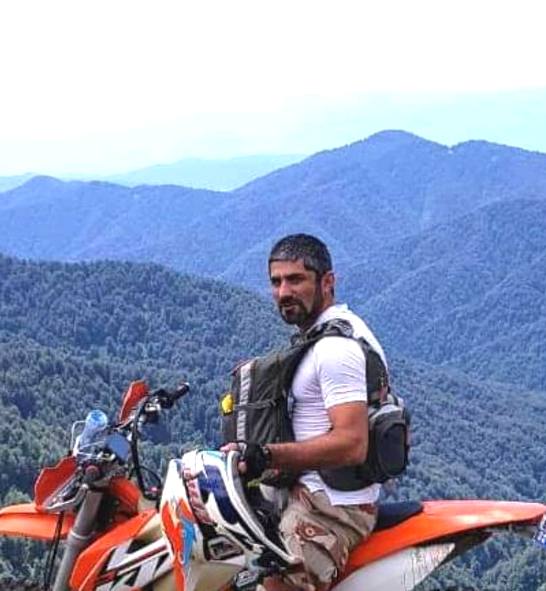 George Tsiskarishvili — Tbilisi, Georgia · offroad motorcycle, adventure motorcycle, 4x4 car
I have been riding motorcycles since I was 5 years old, and motorcycles have been a major part of my life for more than 43 years. I am a multiple motocross pod...
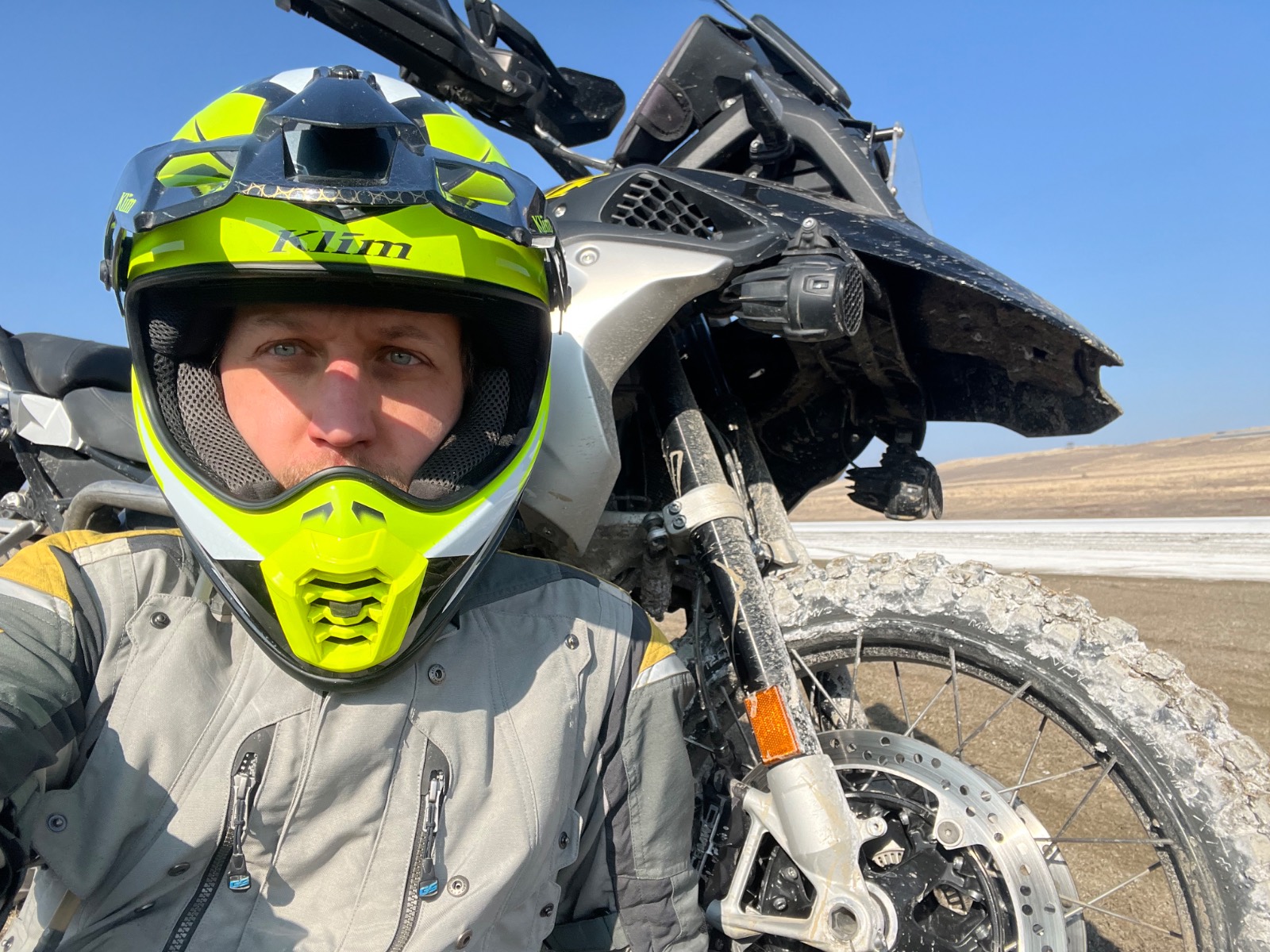 Stanislav Dmitriev — Tbilisi, Georgia · offroad motorcycle, adventure motorcycle
Motorcycle rider and founder of Plan B Motogarage in Tbilisi. I organize motorcycle adventures across Georgia — from easy scenic rides to off-road mountain rou...
 EDVINS BAUERS — Rīga, Latvija · 4x4 car, 4x4 truck, 4x4 van
Guide and 4x4 event organizer since 1999. Off-road tours, overland tours, 4x4 corporate events, overland routes in Latvia and Europe, route GPX files, wild cam...
Active trips in Georgia
- 6 Day Enduro trip - TUSHETI ALPS-KAKHETI WINE REGION · 6 days
- FROM DESERT TO THE CAUCASUS — 6-DAY ADVENTURE MOTORCYCLE TOUR · 6 days
- Georgia with 4×4 Centrs: “From Vineyards to Glaciers” · 8 days
Planning a trip in Georgia?
Browse local guides for Georgia and connect with experts who know the terrain, routes and border crossings. Or create your own trip and find travel companions.
Are you a local guide in Georgia?
Join GuideMeet and get discovered by overland travelers looking for local knowledge, 4x4 support and expedition expertise in Georgia.
Georgia for adventure travel
Georgia is one of those rare countries where the density of adventure is out of proportion to its size. Wedged between Russia to the north, Turkey and Armenia to the south, and Azerbaijan to the east, it sits at the precise crossroads of the Caucasus — a mountain system that rivals the Alps in raw drama but is still largely unknown to the mainstream adventure travel world. For overlanders, motorcyclists, and serious 4x4 travelers, Georgia offers a combination that is almost impossible to find elsewhere: technical mountain terrain, extreme seasonal isolation, a culture of hospitality so embedded it feels structural, and a network of local guides who carry knowledge that no app or satellite map can replicate.
The country divides naturally into four adventure zones, each with its own character, difficulty profile, and seasonal logic.
The Military Highway — the road connecting Tbilisi northward through the Caucasus toward the Russian border at Kazbegi and the Dariali Gorge — is the classic entry point for any serious overland itinerary in Georgia. The route follows the Aragvi River through increasingly dramatic terrain, passing the medieval fortress complex of Ananuri before climbing into a landscape of glaciers, avalanche zones, and high-altitude villages. The Cross Pass at 2,379 meters is the critical bottleneck: it closes with snow as early as October and can remain impassable until late May. When it is open, the road is paved and manageable for most vehicles, but the surrounding terrain — the glaciated flank of Mount Kazbek at 5,047 meters, the towers of Gergeti Trinity Church on its impossible promontory — creates a density of visual and emotional impact that experienced travelers consistently describe as among the strongest in their journey histories. The drive to Kazbegi town and the subsequent track to the Gergeti church is a rite of passage.
Svaneti, in the northwest, is in a different category entirely. The Svan people have inhabited these high valleys for over two thousand years, maintaining a culture — including their unique alphabet, polyphonic music, and the medieval defensive towers that punctuate every village — largely because their geography made them inaccessible to most of history. The main artery into Svaneti runs from Zugdidi up the Enguri valley to Mestia, the regional capital, and continues beyond to Ushguli, a cluster of villages at 2,200 meters that claims to be the highest continuously inhabited settlement in Europe. The Mestia-Ushguli road is one of the most celebrated and most debated drives in the overland world. Depending on conditions — recent rain, snowmelt, time of year — it ranges from a challenging gravel drive to a genuinely technical test of vehicle capability and driver judgment. Exposed river crossings, sections of deeply rutted mud, and the sheer altitude combine to create a route where local knowledge is not supplementary but essential. Many travelers have turned back; many have suffered serious mechanical damage attempting it without preparation. Those who make it to Ushguli find a place that feels genuinely unreached by the contemporary world.
Tusheti, in the northeast, is the most extreme of Georgia's mountain regions. The access road — crossing the Abano Pass at 2,850 meters — is a single-lane gravel track cut into near-vertical slopes, with drops of several hundred meters on one side and no barriers. It is widely considered one of the most dangerous roads in the Caucasus. The pass opens approximately in June and closes again when the first autumn snows make the switchbacks impassable, typically September or October. In winter, Tusheti is completely cut off from the outside world — the villages are abandoned, the population descends to the lowlands, and the region reverts to a silence that has no parallel in the modern European context. In summer, it receives a small but devoted stream of 4x4 travelers and motorcyclists who come specifically for the isolation, the ancient stone villages of Omalo and Shenako, the pastoral culture of the Tushetian people, and the sense of operating genuinely at the edge of the accessible world. For anyone planning to drive the Abano Pass, guidance from someone who has driven it recently — and knows its current condition — is not optional.
Kakheti, in the east, operates at a completely different scale and pace. Georgia's wine region spreads across a broad lowland valley between the Caucasus range to the north and the Alazani River to the south, and is one of the oldest wine cultures in the world. Overland travel here is easier — roads are better, distances are manageable, the terrain is rolling rather than extreme — but the cultural density is extraordinary. The ancient cave city of Vardzia, carved into a volcanic cliff in the south, and the monastery complex of Davit Gareja straddling the Azerbaijan border in a semi-desert landscape, are among the most striking historical sites in the region. Kakheti rewards travelers willing to slow down, engage with local culture, and integrate wine, food, and history into their itinerary in ways that purely technical mountain driving cannot provide.
The Borjomi-Bakuriani area in the southern highlands offers yet another dimension: a ski resort infrastructure repurposed in summer for 4x4 tracks through forested ridges, and a spa town legacy that gives the region a distinctive character. The mineral springs of Borjomi are a Georgian national institution. The forest tracks above the town lead into relatively moderate but scenic off-road terrain suitable for travelers who want mountain driving without the full commitment of Svaneti or Tusheti.
Vehicle considerations in Georgia are straightforward but non-negotiable. For the Military Highway and Kakheti, a standard 4x4 with reasonable ground clearance is sufficient. For Svaneti and the Mestia-Ushguli route, a serious 4x4 — Land Cruiser, Defender, or equivalent — with good off-road tires and ideally a locking differential is strongly recommended. For Tusheti and the Abano Pass, expedition-grade capability, recovery equipment, and ideally a convoy of at least two vehicles is the appropriate standard. Adventure motorcycles are popular throughout Georgia, including on Svaneti routes, but the Abano Pass is approached by experienced riders only. Georgia has a well-established culture of vehicle repair — mechanics in Tbilisi and regional centers can handle most issues — but spare parts availability decreases sharply once you leave the main cities.
Border logistics are a significant variable. Georgia shares borders with Armenia, Azerbaijan, Turkey, and Russia. The Armenian and Azerbaijani borders function and are used by overland travelers, but require current intelligence on crossing hours, documentation requirements, and vehicle insurance specifics. The Turkish border at Sarpi on the Black Sea coast is the busiest and most reliable. The Russian border situation has been complex since 2022 and requires careful current research before planning any crossing. Georgia itself is a Schengen-adjacent country in terms of visa policy — most Western nationalities enter visa-free for extended periods — and vehicle documentation is generally straightforward.
Seasonality shapes everything. The mountain routes are seasonal products: open roughly June through September, inaccessible the rest of the year. Timing travel to coincide with clear weather windows — typically late July and August for maximum access — is essential. Spring and autumn offer dramatic conditions but significantly reduced reliability on the mountain tracks. Winter travel in Georgia is limited to the main highways and lowland regions.
What makes Georgia exceptional as an adventure destination is not just the terrain but the people. Georgian hospitality — the tradition of the supratani feast, the toast culture, the genuine welcome extended to strangers — is not a tourist performance but a deep cultural reflex. Local guides in Georgia tend to be people who have grown up in these regions, driven these tracks since childhood, and carry an emotional as well as practical relationship with the landscape. Finding the right guide here is not just about navigation — it is about access to a culture and a mountain world that does not open itself easily to those who arrive without introduction.
GuideMeet connects travelers with exactly these local guides across Georgia. Whether you need a driver-guide for the Mestia-Ushguli route, someone who knows the current condition of the Abano Pass, a local contact in Kakheti for a wine-region loop, or a Tbilisi-based fixer for pre-expedition preparation, the platform brings together the travelers who want to go and the guides who know how to get there. Georgia is a country where local knowledge is the difference between an extraordinary journey and an incomplete one.
Travelling with a local guide
Not sure whether you need a guide, or how to pick one you have never met? Travelling with a local guide covers when a guide is genuinely needed, what to check before leaving (permits, vehicle, emergency contacts) and how to agree price and exceptions.
Frequently asked questions
How do I find overland guides in Georgia on GuideMeet?
Browse local guides for Georgia on GuideMeet, compare their experience, vehicles and languages, and message them directly to plan routes, permits and border crossings. As of October 2026, there are 3 local guides on GuideMeet operating in Georgia (2 4x4, 2 motorcycle, 1 camper / van).
How much does it cost to contact a guide in Georgia?
Nothing — GuideMeet is free and takes no commission. You contact the guide directly on the platform and agree terms between yourselves, with no middleman.
Are you a local guide in Georgia?
Join GuideMeet and get discovered by overland travelers looking for local knowledge, 4x4 support and expedition expertise in Georgia.