Rules for overlanding in Brazil
Updated October 2026
🌐 Italiano · Français · Español
Is a guide mandatory in Brazil?
Yes, but only in some areas or activities
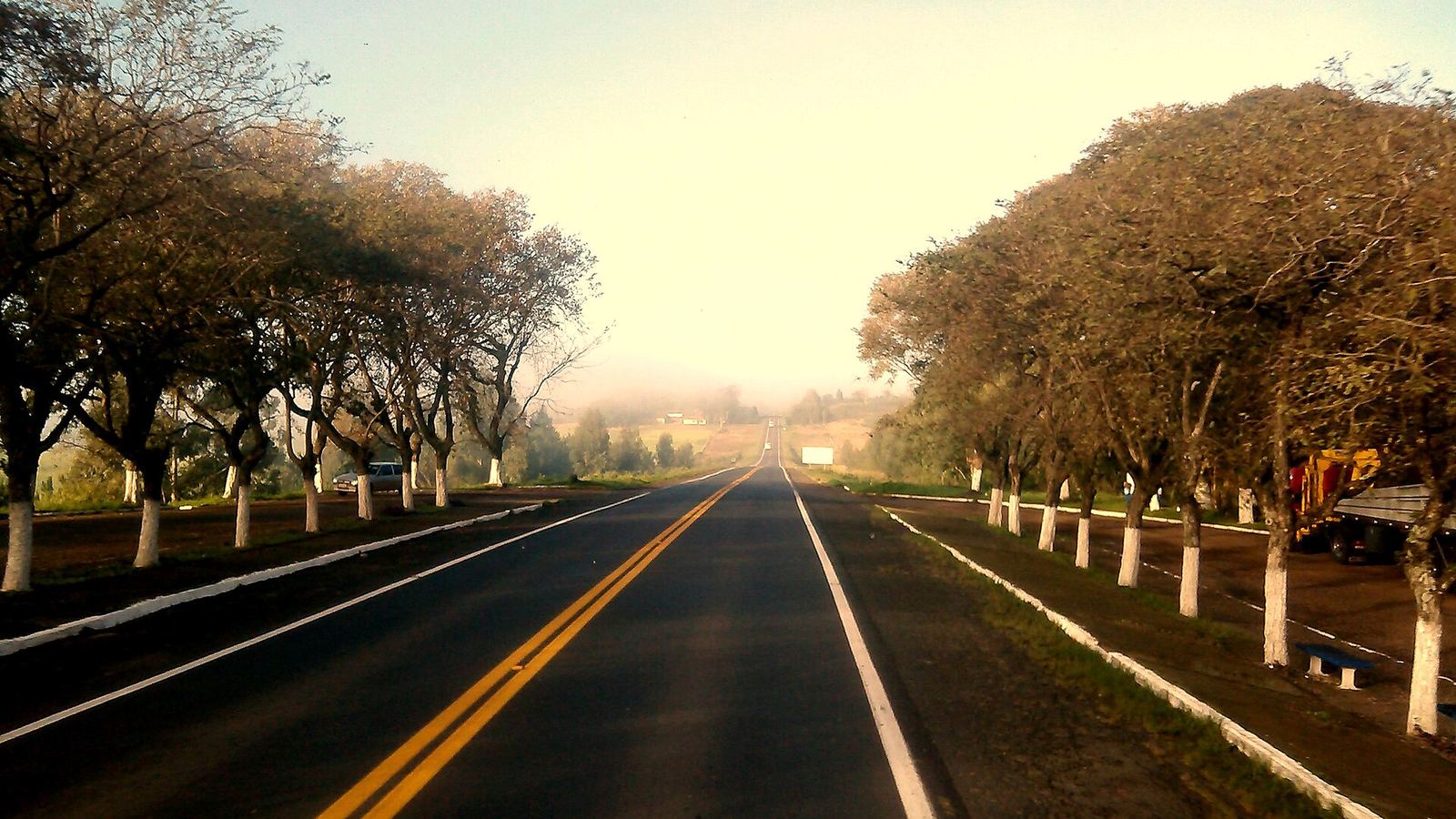
Rio do Boi trail (Aparados da Serra)
Our summary of the country advice published by the Italian Ministry of Foreign Affairs (Viaggiare Sicuri) on 10 September 2026.
Which driving licence do I need in Brazil?
All vehicles
An adult Italian citizen may drive a motor vehicle for a maximum of 180 days from the date of entry while holding a valid Italian licence, an identity document, meaning the passport, and an International Driving Permit on the 1968 Vienna Convention model. Check what applies to the licence you hold.
An International Driving Permit states the categories it covers: check yours covers what you will actually drive. A car licence does not cover a motorcycle, and a heavy camper or a truck can need a higher category.
At the wheel
What insurance do I need to drive in Brazil?
Third-party liability cover is compulsory. A foreign policy is only valid if it carries the wording "Valid for Brazil" and is issued by an insurance company represented in Brazil.
Driving someone else's vehicle
If the vehicle is not yours, get a letter of authority to drive from the owner with the signature notarised.
What is the drink-driving limit in Brazil?
The "lei seca" is very severe: even the smallest trace of alcohol is punishable.
Speed enforcement
Speed limits are tightly enforced, with electronic detection widespread in the cities in particular.
Roads
The road network is not in good condition and, since freight moves mostly by road, driving is fairly dangerous. Brazilians generally cover the long distances between cities by air instead.
Windows up
Drive with the windows closed, especially when stopped at traffic lights, and do not use the phone at the wheel. Theft from cars is very frequent and carjacking does happen, particularly on the big arteries and inside tunnels.
Protests block roads
Demonstrations can start suddenly in any Brazilian city and when they do, road traffic and public transport can both be interrupted.
Rain damage
Heavy rain frequently cuts the connecting roads, rural ones above all. After the severe floods of 2024 across Rio Grande do Sul, which damaged the road network, caution is still advised when travelling in that state.
What catches travellers out
Drugs
The law is very severe. Dealing and international trafficking carry five to ten years in prison, while use and possession of small quantities bring shorter custodial sentences depending on the case.
Cash declaration
Cash above 10,000 USD or the equivalent in any currency must be declared on a form when you enter the country. Exchange is unrestricted and straightforward at bureaux, larger hotels and banks.
Card fraud
Bank and credit card fraud is common, including cards cloned at ATMs and in shops.
No live animals
Do not buy parrots, monkeys or other tropical animals. Being accused of trafficking protected species carries the risk of imprisonment.
Vehicle, drones and permits
What do I need to bring my own vehicle into Brazil?
Brazil's Receita Federal (customs) states in its Traveller's Guide that a foreign land vehicle registered in a bordering country, for the private use of a non-resident traveller entering at a customs border point, is granted temporary admission automatically (driven by the traveller, or carried by another vehicle driven by the traveller). It adds that the vehicle's permitted stay is the same period granted to the foreign tourist when the vehicle is for the tourist's use, and that other vehicles for the traveller's private use go through the e-DBV declaration. (Receita Federal do Brasil — Guia do Viajante: Admissão Temporária de Bens e Veículos (atualizado em 07/04/2026))
Can I bring and fly a drone in Brazil?
DECEA, Brazil's airspace control authority, states in the FAQ of its drone portal that recreational flights must respect operating limits including a maximum height of 200 feet (60 m) AGL, a horizontal distance of up to 300 metres from the pilot and visual line of sight. It adds that, as a rule, airspace access must be requested through the SARPAS system, including for drones under 250 g, and that the aircraft must also be registered in ANAC's SISANT (the FAQ gives no weight threshold for this registration). (DECEA (Departamento de Controle do Espaço Aéreo) — Portal DRONE (UAS): Dúvidas Frequentes)
Can I drive off-road and in national parks in Brazil?
Brazil's law on the national system of conservation units (Law 9,985/2000) states that public visitation is prohibited in Ecological Stations, except for educational purposes as the management plan or specific regulation provides. For National Parks it states that public visitation is subject to the norms and restrictions of the unit's management plan, the rules set by the administering body and those provided in regulation. (Presidência da República — Lei nº 9.985, de 18 de julho de 2000 (Sistema Nacional de Unidades de Conservação da Natureza, SNUC), arts. 9 e 11)
Going with your own vehicle?
One local guide on GuideMeet works in Brazil: they know the roads, the permits and the areas to avoid. You contact them directly, free and with no commission.
 Rota Austral Expeditions
Blumenau, Brasil
Before you rely on this
This is our summary of advice written by the Italian Ministry of Foreign Affairs for Italian travellers, published on 10 September 2026. We summarise in good faith, but we cannot guarantee it is accurate, current or complete, and we take no responsibility for decisions made on the basis of it. Rules change without notice and are applied by officials at the border, not by websites. Always read the original source and the travel advice your own government publishes for Brazil before you travel. Where a guide's profile shows “Licence verified”, we found that licence in the official public register; otherwise GuideMeet has no way of checking whether an individual guide meets any standard mentioned here — ask them directly.
The points in "Vehicle, drones and permits" come from official sources of the country itself, cited next to each one.
Source: Viaggiare Sicuri — Italian Ministry of Foreign Affairs, updated 10 September 2026. Last checked by GuideMeet on 7 October 2026.