Do you need a local guide in Algeria?
🌐 Italiano · Français · Español
Is a guide mandatory in Algeria?
Yes, but only in some areas or activities
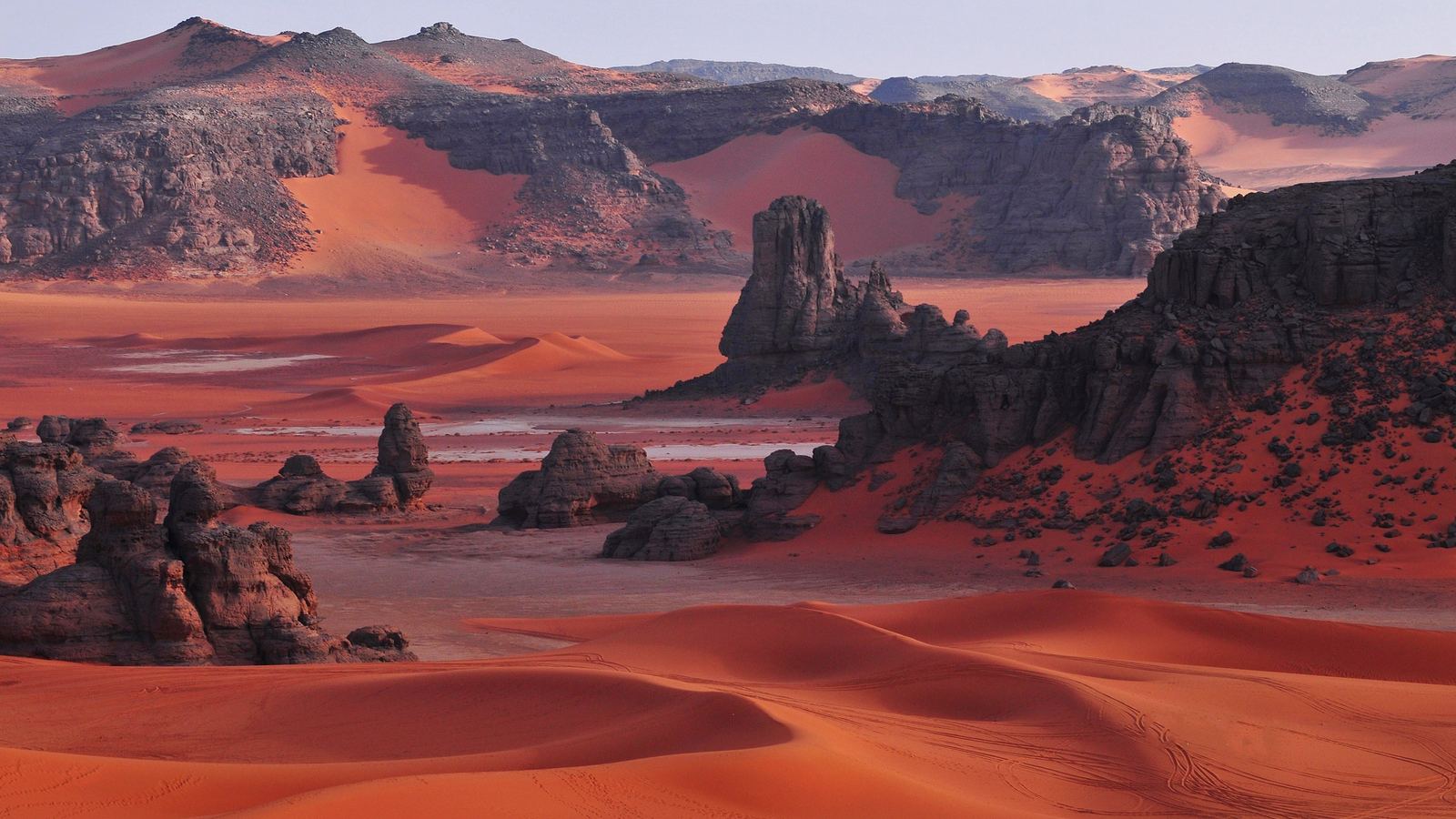
Sahara and the Great South: trekking, 4x4 and motorcycle trips
For the Sahara, yes. The Algerian foreign ministry's visa on arrival for the Great South works only through an accredited Algerian travel agency, which organises the trip and sends you the QR-code authorisation you need to board. On the ground, the Italian foreign ministry says trekking, excursions and 4x4 or motorcycle trips are not possible without an authorised local guide and prior agreement from the local authorities. It also says that tourist itineraries in Algeria must be planned through a local agency recognised by the government, which has to notify the route to the security services in advance, and that the northern regions and the Algerian Sahara are advised against without an authorised stay and guide.
Why it matters in Algeria
The visa itself goes through an agency
On an exceptional and temporary basis, and in place of consular visas, Algeria issues visas on arrival to foreign tourists heading for the tourist wilayas of the Great South. You agree the trip with an accredited Algerian travel agency and give it your identity, travel document and chosen itinerary; the agency sends you a QR-code authorisation that lets you board, in line with the tourist programme it has organised. The Italian foreign ministry says this visa is issued at border control at Algiers international airport or at other airports in the south of the country, at present only Djanet; it does not describe it as available at land or sea entry points. (Embassy of Algeria in Tokyo (Algerian Ministry of Foreign Affairs) — Introduction of regularization visas (visas upon arrival) for tourists traveling to the south of Algeria)
No desert trip without an authorised guide
Trekking, excursions and recreational trips by 4x4 or motorcycle are not possible without an authorised local guide and prior agreement from the local authorities, who only clear routes that the army keeps under surveillance. Depending on the situation, the authorities can close tourist routes or roads to traffic, or make an escort compulsory. In the Djanet and Tamanrasset areas, the Italian foreign ministry recommends joining group trips organised by agencies recognised by the Algerian government, avoiding any activity outside the protected areas (around Djanet, above all next to the Libyan border) and always informing your embassy first. It makes the same recommendation for Djemila, Timgad, the Batna to Biskra route, Ghardaia, El Oued, Taghit and Beni Abbes and, preferring air travel, for Constantine, Bejaia, Oran, Mostaganem, Tlemcen, Cherchell, Tipaza and Annaba. (Viaggiare Sicuri — Italian Ministry of Foreign Affairs)
Your movements are declared
Foreign travellers must report their presence, and any movement outside the province of Algiers, to the nearest Gendarmerie station or police commissariat, and the recognised agency must notify your route to the security services in advance so that protection can be arranged. If an agency or a hotel hosts you, make sure they actually file it on your behalf. (Viaggiare Sicuri — Italian Ministry of Foreign Affairs)
Planning and moving around the country
The Italian foreign ministry says tourist itineraries in Algeria must be planned through a local travel agency recognised by the Algerian government, and tourist travel, especially in the central and southern areas, must use companies the government formally recognises. It recommends limiting travel inside the country to what is essential and advises preferring plane or train. It advises against using a car outside the main cities, at night and on peripheral roads, and notes that the Ghardaia to Tamanrasset axis is monitored by the Algerian military but banditry can occur at its most isolated points. Importing video cameras, binoculars, GPS units and drones, even temporarily, is subject to extremely restrictive authorisations. (Viaggiare Sicuri — Italian Ministry of Foreign Affairs)
Some areas are off the map
Travel to the areas bordering Mali, Niger, Libya, Morocco (the land border is closed), Mauritania and Tunisia is advised against in the strongest terms by the Italian foreign ministry. In the north it advises against travelling to rural, mountainous and interior areas, Kabylia included, in particular the provinces of Ain Defla, Batna, Bouira, Medea and Tizi Ouzou, and against going to the northern regions without an authorised stay and guide. Even around Djanet, where the army protects the usual tourist itineraries, a Swiss tourist was murdered in October 2024 and a Spanish tourist kidnapped in January 2025. (Viaggiare Sicuri — Italian Ministry of Foreign Affairs)
What to ask a guide before you book
- Is your agency accredited by the Algerian authorities? Can it apply for our visa on arrival for the Great South, and at which airport is it issued (Algiers or, in the south, at present only Djanet)?
- Will an authorised local guide be with us for the whole desert section, and does the guide carry a satellite communication device?
- Who notifies our route to the security services, and what changes if an escort is imposed?
- If we bring our own vehicle, which entry point do we use, given that the land border with Morocco is closed, and who helps with the customs temporary-admission papers and the compulsory local insurance?
Sources
- Embassy of Algeria in Tokyo (Algerian Ministry of Foreign Affairs) — Introduction of regularization visas (visas upon arrival) for tourists traveling to the south of Algeria — consulted 21 September 2026
- Viaggiare Sicuri — Italian Ministry of Foreign Affairs — consulted 21 September 2026, updated 27 July 2026
Local guides in Algeria
14 independent local guides work in Algeria on GuideMeet. You contact them directly: free, no commission. See the guides in Algeria
 La Route du Tassili N’azjjer Voyages
Djanet, Algérie Laïd Biou Sahara Africa Tours
Djanet, Algeria Desert Magic tours
Djanet, Algeria Algeria Trail Adventure
Alger, Algérie محمد علي
Algeria Abdenour SI SMAIL
Alger, Algérie
Trips with local guides
- The great western Algeria road · Apr 2027
- DISCOVER DJANET & THE MAGIC OF THE ALGERIAN SAHARA
- ALGERIA 4X4 2026 - Terra Tuareg · Dec 2026
- Tadrart 2027 new year · Dec 2026
New on GuideMeet
 Masoud Ragab
Zuwara, Libya Maurizio Turco
Roma, Italia Guy Cesaro
Tunis, Tunisie
Before you rely on this
This page summarises official sources in good faith, on the dates shown above. We cannot guarantee it is accurate, current or complete, and we take no responsibility for decisions made on the basis of it. Rules change without notice and are applied by officials on the ground, not by websites. Always read the original sources and your own government's travel advice for Algeria before you travel. Where a guide's profile shows “Licence verified”, we found that licence in the official public register; otherwise GuideMeet has no way of checking whether an individual guide holds a licence or meets any standard mentioned here — ask them directly.